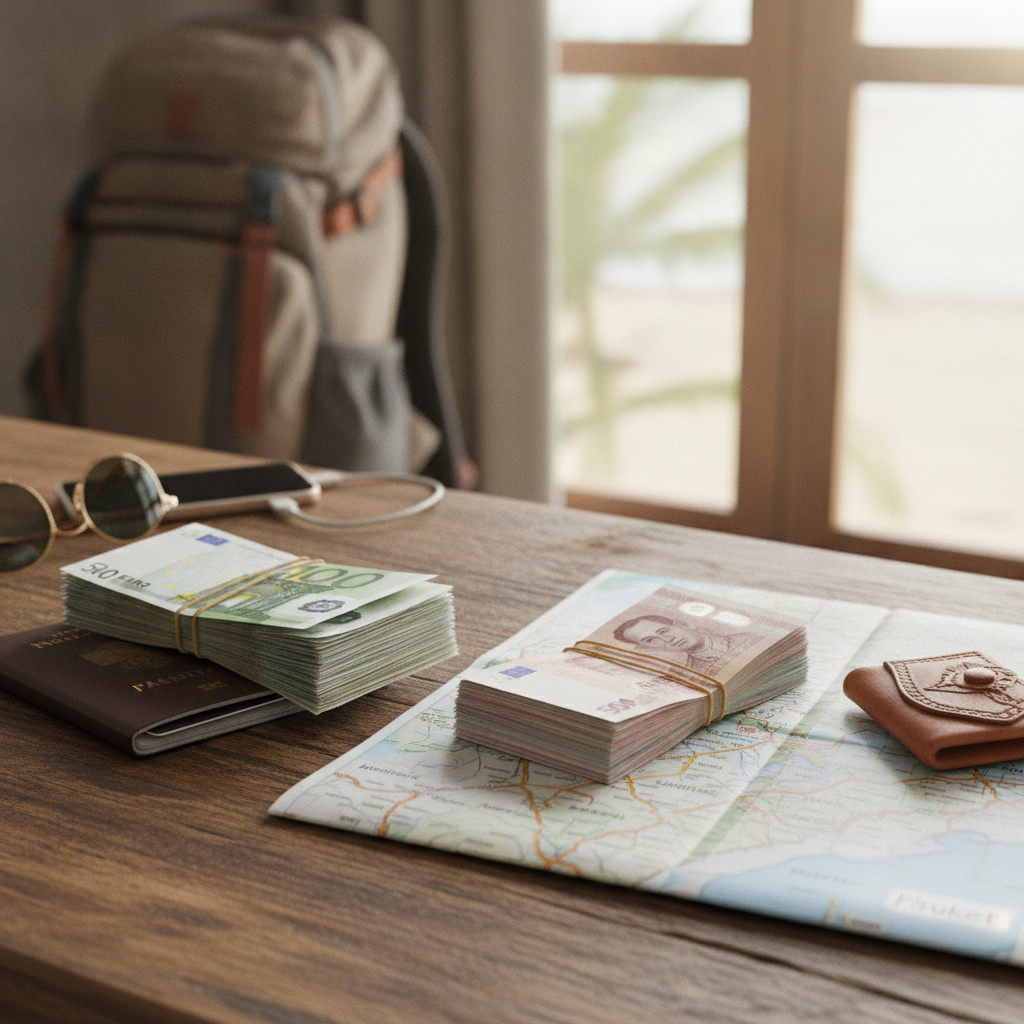
Even the most carefully planned trip can unravel fast when an unexpected expense hits and there's no financial cushion to absorb it. A missed connection, a stolen wallet, a sudden illness, a hotel that won't accept your card — these aren't rare worst-case scenarios. They're the kinds of things that happen to real travelers every year, and they tend to strike hardest when your budget is already stretched to its limit. The fix isn't complicated, but most people skip it entirely: building a dedicated cash buffer that lives completely outside your main travel fund.
Separate the Buffer From Day-One Spending Money
Keeping your emergency buffer in the same mental or physical account as your regular travel spending is a reliable way to accidentally spend it. The whole point of this money is that it doesn't feel available. Open a second account or use a separate prepaid travel card — something like a Wise or Revolut account works well for this — and transfer the buffer there before you leave. When you see it sitting untouched, you stop thinking of it as spending money. That psychological distance is exactly what you want.
Size the Buffer to the Destination, Not Just the Trip Length
A weekend trip to Montreal carries very different emergency costs than two weeks in Southeast Asia or a road trip through rural Portugal. Think about what a worst-case scenario actually costs in that specific place: emergency medical care, last-minute accommodation, a rebooking fee, or a replacement document. Urban destinations with strong tourist infrastructure tend to have more predictable emergency costs. Remote or less-traveled areas can surprise you with fewer options and steeper prices when things go wrong. Size your buffer accordingly, not just as a flat percentage of your total trip cost.
Use Local Currency Logic When Setting the Amount
In countries where your home currency converts favorably, your buffer might stretch further than you'd expect. In expensive cities like Zurich, Tokyo, or Copenhagen, the same nominal amount covers far less. Before finalizing your buffer, do a quick mental audit of what emergency services actually cost locally — a taxi to a hospital, one night in a mid-range hotel, a same-day flight rebooking. That grounded thinking keeps your buffer realistic rather than optimistic. Travelers who skip this step often discover mid-crisis that their backup fund barely covers the first hour of the problem.
Distribute the Buffer Across Multiple Storage Points
A single emergency fund does you no good if it's in the wallet that just got pickpocketed. Spread the buffer across at least two places: a card stored separately from your main wallet, and a small amount of physical local cash tucked somewhere secure, like a hidden pocket in your bag or your accommodation safe. Apps like Google Pay or Apple Wallet can serve as an additional layer if your destination's merchants support contactless. Redundancy here isn't paranoia — it's just how practical travelers protect themselves.
Treat Medical Costs as a First-Priority Budget Line
Medical emergencies are the most common reason trips end early, and they're also the most variable in cost. Travel insurance helps, but insurance reimbursement takes time, and most providers expect you to pay upfront and claim later. Your cash buffer should be large enough to cover an urgent care visit, a pharmacy run, or at minimum a taxi to a clinic without maxing out a card. In countries without reciprocal healthcare agreements, even a basic consultation can run higher than expected. The buffer bridges the gap between when you need care and when your insurer eventually pays out.
Build in a Rebooking Reserve for Transit Disruptions
Flight cancellations, missed trains, and border delays create downstream chaos that costs money at every stage. Hotels charge for no-shows. Tours don't refund last-minute cancellations. Rebooking a flight on the same day — especially internationally — can cost multiples of the original fare. Having a portion of your buffer explicitly earmarked for transit disruptions means you're not scrambling to figure out what to sacrifice. It also keeps you from making panicked decisions, like booking the first available option regardless of cost, just because you feel financially cornered.
Lock the Buffer Behind a Rule, Not Just a Feeling
The buffer only works if you actually leave it alone when things go mildly wrong. Set a clear personal threshold for when the buffer gets touched — something specific, like "I only access this if a single unexpected expense exceeds what I can reasonably absorb from my daily spending allowance." Without a rule, it's tempting to dip into the buffer for a splurge dinner or an impulsive day trip, and then it's gone before the real emergency arrives. A rule removes the in-the-moment negotiation with yourself.
Replenish and Review the Buffer After Every Trip
After you return home, take five minutes to assess how the buffer performed. Did you touch it? Was it sized right? Did any close calls reveal a gap in your thinking? Over time, these short post-trip reviews build a personal framework that makes each future trip more financially resilient. Apps like TravelSpend or Trail Wallet can help you track where the edges of your budget actually got tested. Most travelers find that their buffer strategy gets sharper and more efficient with each trip — the first one you build doesn't have to be perfect.
As travel costs continue to shift — with dynamic airline pricing, fluctuating exchange rates, and growing destination-specific entry requirements — having a dedicated financial cushion is becoming less of a nice-to-have and more of a baseline travel skill. The travelers who consistently have good experiences aren't necessarily the ones with the biggest budgets. They're the ones who've thought a few moves ahead and given themselves room to handle what they didn't plan for.