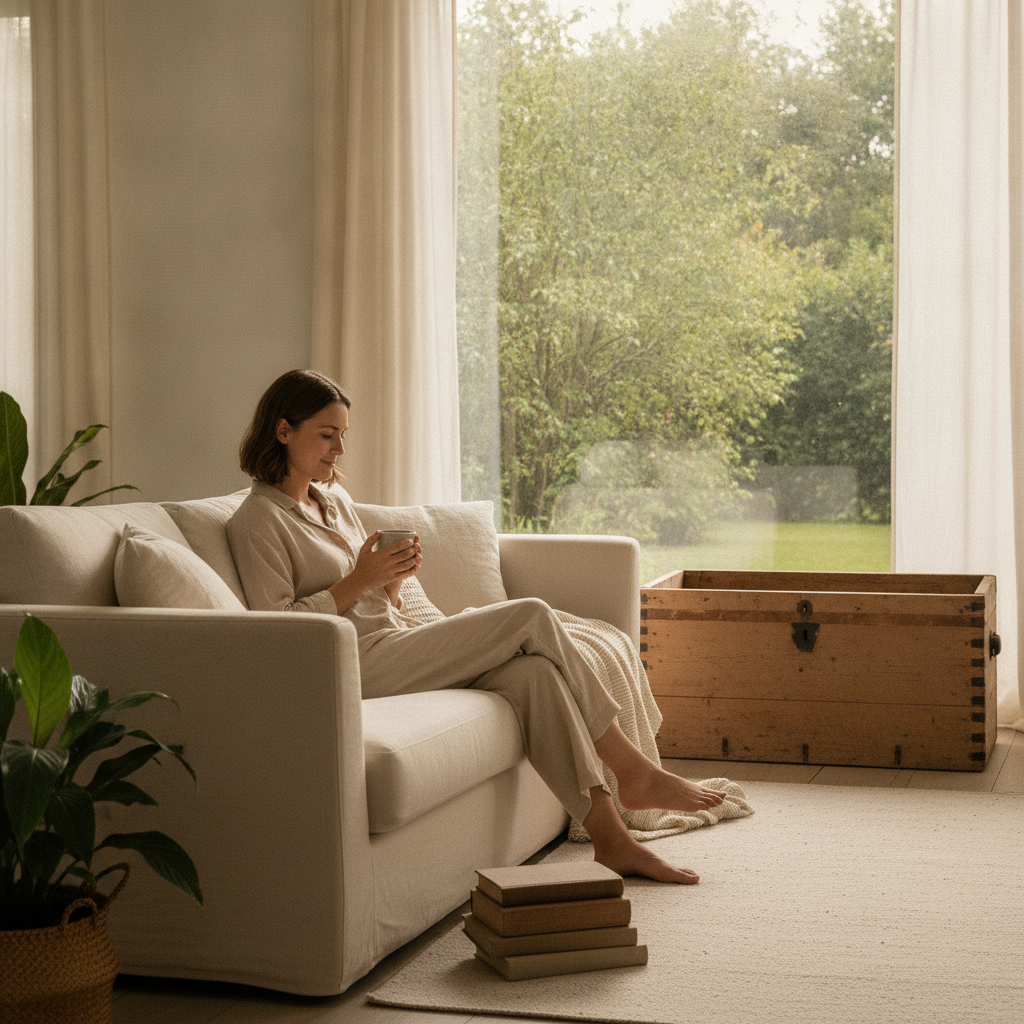
Consumption, at its most honest, is a search for sufficiency — and yet most people move through life without ever stopping to define what sufficient actually means for them. The modern retail environment, from the curated storefronts of West Elm to the frictionless checkout of Amazon, is engineered to keep that definition perpetually out of reach, always suggesting that one more purchase sits between the buyer and some vague sense of completeness. What happens, though, when a person quietly draws a line and decides what they already have is genuinely enough? The answer, as it turns out, isn't deprivation. It's something closer to clarity.
The Concept of a Personal Sufficiency Threshold
Philosophers and economists have long distinguished between *utility* — the practical value an object provides — and the psychological charge that surrounds acquiring something new. The Japanese concept of *ma* (間), which loosely translates to meaningful empty space, offers a useful frame here: the idea that absence itself can be purposeful, that a room or a wardrobe or a kitchen without excess has its own kind of fullness. Defining an "enough threshold" borrows from this sensibility. It's the point at which a person consciously decides that their current possessions meet their actual needs, and that future purchases must clear a higher bar to justify entry. Unlike strict minimalism, this threshold isn't ideological — it's personal, practical, and quietly powerful in how it reshapes the impulse to browse.
When someone internalizes a sufficiency threshold, the most immediate change isn't in their bank balance — it's in how they experience desire itself. The wanting doesn't disappear, but it loses some of its urgency. A notification from Patagonia about a new fleece collection lands differently when a person has already decided their current jacket is enough. They can admire the craftsmanship, appreciate the design, and close the tab without the low-grade anxiety that normally accompanies resisting a purchase. Psychologists refer to this as reduced *reactance* — the mental friction that comes from feeling like something desirable is being withheld. When the threshold is self-defined rather than externally imposed, the friction dissolves. The person isn't denying themselves; they've simply concluded the transaction isn't necessary.
What Shifts in the Act of Browsing
Browsing, for most people, functions as a form of entertainment and emotional regulation as much as it does practical research. Scrolling through IKEA's catalog or wandering a weekend market feels pleasurable precisely because it activates anticipation — what behavioral economists call the *wanting system* — without requiring commitment. The problem is that habitual browsing without a sufficiency framework creates a low-level acquisitive hunger that persists regardless of how much one already owns. A defined threshold doesn't eliminate browsing, but it changes the quality of attention brought to it. The gaze becomes more discerning. What was once a passive, absorptive activity becomes something closer to curation — and that shift has real downstream effects on spending patterns over months and years.
There's also a subtler transformation that occurs in how a person relates to the objects they already own. When the threshold is defined, existing possessions tend to receive more appreciation, more maintenance, and more deliberate use. A cast-iron skillet that was previously just background furniture in a kitchen cabinet becomes, within a sufficiency framework, a considered tool — something chosen, kept, and valued. This mirrors the *wabi-sabi* (侘寂) aesthetic tradition from Japan, which finds beauty in the worn, the imperfect, and the enduring. Objects aren't diminished by age and use; they accumulate meaning. That reframing is quiet, but it's genuinely at odds with how consumer culture typically positions ownership — always as a prelude to the next upgrade rather than an endpoint worth honoring.
The Practical Architecture of Setting a Threshold
Defining a personal enough threshold isn't a single dramatic declaration — it's more of an ongoing audit, conducted honestly and revised as life changes. Some people find it useful to move through their possessions category by category: clothing, kitchen equipment, books, digital subscriptions, hobby gear. For each category, the question isn't "do I love everything here?" but rather "does what I have adequately serve how I actually live?" The distinction matters. Adequacy is a more honest and durable standard than love, because it resists the marketing language that conflates ownership with identity. Tools like the app Decluttr or the practice of a simple notebook inventory can make this audit concrete rather than abstract, grounding the threshold in reality rather than aspiration.
The threshold also interacts usefully with waiting periods. Many people already practice some version of a purchase pause — delaying a decision to see whether the desire persists. But a sufficiency threshold gives that pause a different quality. Instead of simply waiting out an impulse, the person is measuring the potential purchase against a defined standard: does this genuinely add something my current possessions don't provide? That question, asked seriously, eliminates a significant portion of purchases before they're even made, not through willpower but through clarity. The work happens upstream, in the defining, not downstream in the resisting.
A Quieter Way of Living With Things
If you've spent any time trying to resist a purchase through discipline alone, you already know how exhausting that approach becomes over time. The threshold model works differently — it transfers the effort from the moment of temptation to a calmer, more reflective moment when you're not standing in a store or mid-scroll on your phone. Once the line is drawn, the decisions at the point of purchase require far less energy. What feels like self-restraint from the outside is, from the inside, simply the absence of a genuine need. The craving for newness doesn't vanish, but it finds fewer footholds.
Consumption, as the opening observation suggests, has always been a search for sufficiency. What the threshold does is answer that search — not permanently, not perfectly, but with enough clarity to quiet the noise. The things already owned begin to feel more like choices and less like defaults. New purchases, when they do arrive, carry more weight and more gratitude. And the space between wanting and buying becomes, over time, less a battlefield and more a place where genuine preference gets a chance to speak.