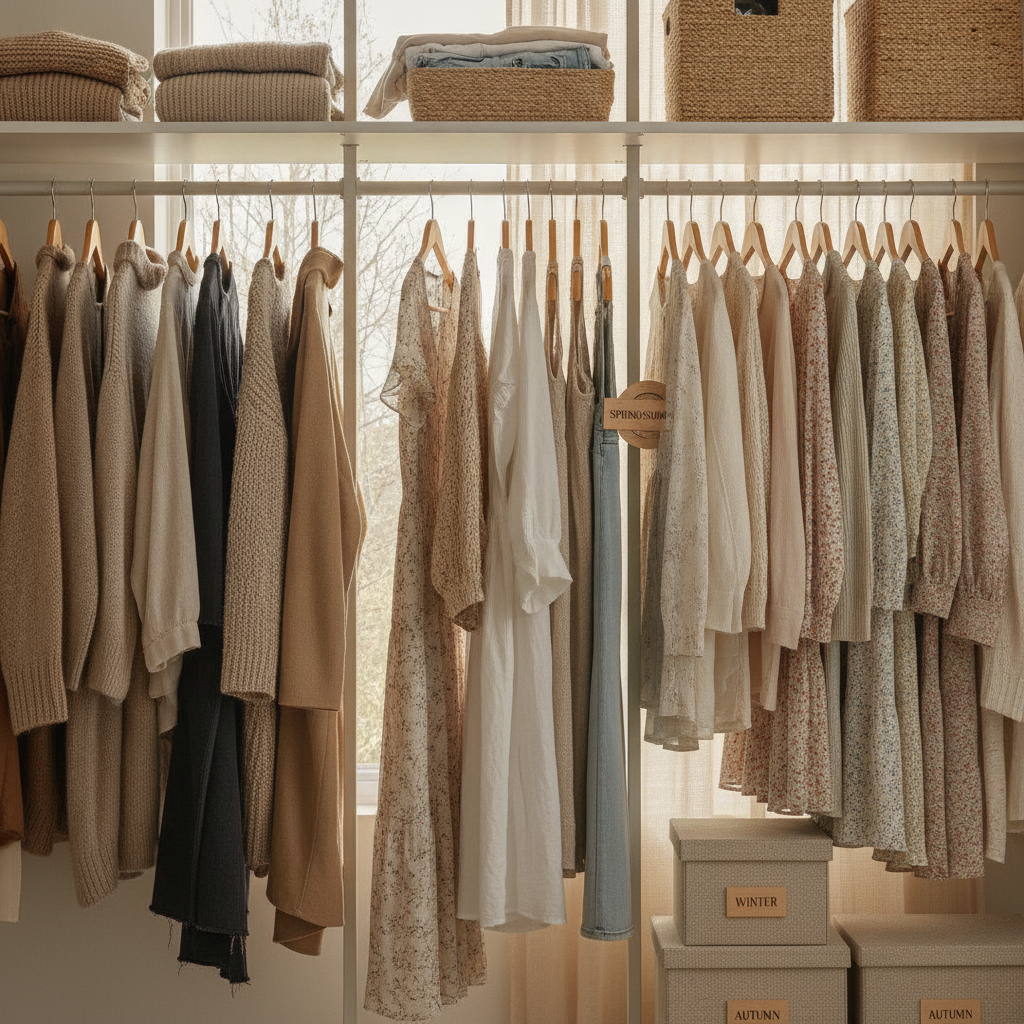
Most mornings don't fall apart because of big problems — they unravel quietly, one small friction at a time. Standing in front of a cluttered closet, pulling out a sweater that doesn't belong in summer, or scanning past clothes you'd forgotten you owned all chip away at your mental energy before the day has even started. Wardrobe overwhelm is a real and underappreciated source of daily stress, and seasonal rotation is one of the most practical ways to address it.
The idea isn't about minimalism for its own sake. It's about reducing the number of irrelevant choices your brain has to filter through each morning. When your closet only contains what's actually wearable right now, getting dressed becomes faster, calmer, and far less draining.
Clear the Off-Season Pieces From Your Closet
The first move is also the most impactful one: physically remove clothing that doesn't belong in the current season. Heavy wool coats, thick knit jumpers, and flannel shirts take up visual and cognitive space when temperatures are climbing. Store them in vacuum bags, under-bed containers, or a dedicated wardrobe section — somewhere out of your daily sightline. Brands like IKEA and The Container Store offer storage solutions that keep off-season clothes accessible but genuinely out of the way. When you only see clothes that make sense for the weather, your brain stops wasting energy filtering out the ones that don't.
Sort by Outfit Logic, Not Just Category
Most people organise their wardrobes by type — all tops together, all trousers together. A more functional approach groups items by how they actually get worn. Think about your regular week: workdays, casual weekends, the occasional evening out. Arranging sections of your wardrobe around these contexts means you're not reassembling outfits from scratch every morning. You're choosing from a small, pre-edited set of combinations that already work together. This shift sounds minor, but it turns a daily puzzle into a simple decision.
Do a Condition Check Before You Store
Seasonal rotation gives you a natural moment to assess what's worth keeping. Before folding anything away, go through each piece with fresh eyes. Check for worn-out elbows, faded fabric, buttons that need replacing, or items you simply never reached for. Holding onto damaged or unworn clothes doesn't serve you — it just adds noise. Apps like Stylebook or Whering can help you track what you actually wear over a season, which makes these condition reviews more grounded in real data rather than vague memory.
Build a Capsule Core for Each Season
A seasonal capsule doesn't need to be a rigid formula, but having a reliable core of 15 to 20 pieces that mix and match well takes a lot of pressure off daily dressing. Choose a neutral base — navy, white, camel, grey — and then add a few seasonal accent pieces each time around. For spring, that might mean lightweight linen trousers and a couple of printed tops. For autumn, textured layering pieces and ankle boots. The goal is a wardrobe where almost everything works with almost everything else, so getting dressed feels effortless rather than creative.
Create a Consistent Swap Routine Each Season
One reason seasonal rotation fails is that it gets treated as a big, irregular project rather than a light, recurring ritual. Tying your swap to something predictable — a long weekend in March, a quiet Sunday in September — keeps it manageable. Set aside two to three hours, put on a podcast or a playlist, and work through your wardrobe systematically. Doing the same process at the same rough time each year means it never builds into an overwhelming task. Consistency makes it easy; ease makes it sustainable.
Use the Transition Period to Reset Your Whole System
Seasonal changeovers are a useful reset point beyond just clothes. While you're pulling out spring or autumn pieces, it's worth reassessing storage areas, decluttering accessories, and cleaning your wardrobe surfaces. This is also a good moment to identify gaps — if you're reaching into your spring rotation and realising you have no lightweight blazer or comfortable sandals, you've got a clear, specific shopping list rather than a vague sense of needing things. Targeted purchases feel much better than reactive ones, and they tend to result in clothes you actually wear.
Keep a Small "Transitional" Section Within Reach
Weather rarely shifts in a straight line. A week of warm days in early spring can be followed by a sharp cold front, and dressing for that kind of overlap is genuinely tricky. Rather than leaving half your wardrobe out "just in case," keep a small transitional section — five to eight pieces — that bridge the gap. A lightweight cotton cardigan, a versatile mid-layer, a pair of trousers that work in either direction. This gives you flexibility without cluttering the full rotation, and it avoids the frustration of needing something that's already been packed away.
Let Your Wardrobe Reflect Your Actual Life
One of the quieter benefits of seasonal rotation is that it forces honesty about how you actually live, rather than how you imagine you do. Many closets are full of aspirational pieces — the formal dress worn twice in five years, the gym wear bought in January, the occasion-wear still waiting for its moment. When you rotate seasonally and track what genuinely gets used, patterns emerge. Your real wardrobe — the one that suits your actual schedule, your real preferences, your everyday context — becomes clearer. And a wardrobe that reflects your real life is one that supports you rather than complicates you.
Morning stress rarely has a single cause, but a cluttered and disorganised closet is a surprisingly consistent contributor. Seasonal rotation is a small, repeatable habit that quietly reshapes the start of each day. Start with just one season — clear out what doesn't belong, organise what does, and notice how different the morning feels when your choices are simple and clear.