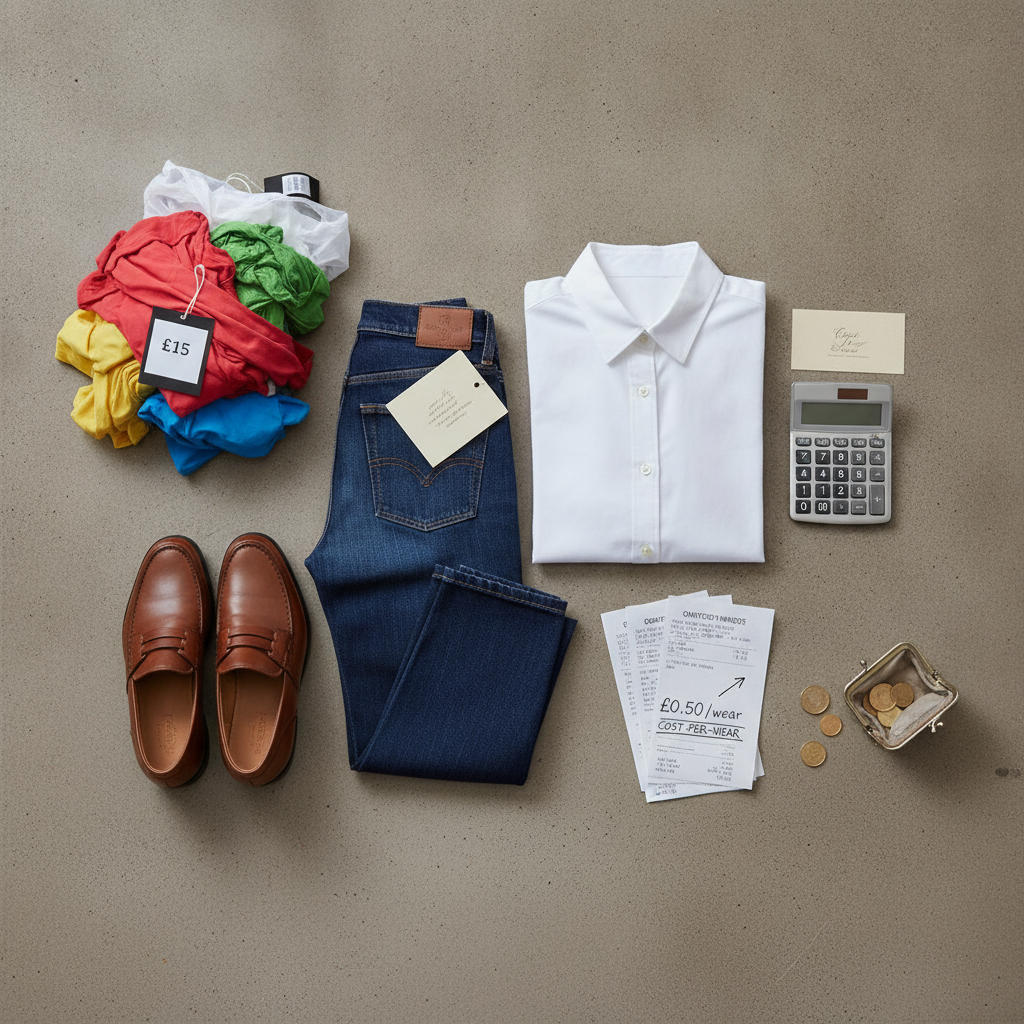
Fast fashion makes it easy to fill a closet without ever feeling truly dressed. You buy a $12 top because the price feels harmless, wear it twice, and then it sits folded at the bottom of a drawer until you quietly donate it months later. The cycle repeats, and somehow you still feel like you have nothing to wear. The price-per-wear method is a practical framework that cuts through that pattern — not by making you spend more, but by helping you spend smarter.
Understand What Price-Per-Wear Actually Means
The concept is straightforward: divide the cost of a garment by the number of times you realistically expect to wear it. A $90 pair of well-made trousers worn 60 times works out to $1.50 per wear. A $20 pair worn four times before they lose their shape costs $5 per wear. That math reframes the whole conversation around value rather than sticker price. Once you start thinking this way, you stop evaluating clothing by what it costs to take home and start evaluating it by what it costs to actually use.
Audit Your Current Wardrobe Before Buying Anything New
Before applying this formula to future purchases, run it backward on what you already own. Pull out anything you haven't worn in six months and estimate how many times you've actually used it. Most people discover a cluster of low-cost impulse buys that ended up being the most expensive things in the closet on a per-wear basis. This exercise isn't about guilt — it's about building an honest picture of your spending patterns. Apps like Stylebook or Whering let you log outfits and track wear counts automatically, which makes this audit far less painful than doing it from memory.
Set a Personal Price-Per-Wear Threshold
Decide on a number that works for your lifestyle and budget. Many shoppers use somewhere between $1 and $3 per wear as a reasonable target, though the right figure depends on how frequently you rotate your wardrobe. If you work from home and wear the same five pieces constantly, a higher upfront cost on those core items makes sense. If you attend a lot of one-off events, your threshold for occasion wear might be looser. The point is to have a number before you shop, so you're making comparisons rather than justifications in the moment.
Evaluate Basics Differently Than Trend Pieces
Not all clothing carries the same wear potential. A well-constructed white shirt from a brand like Everlane or a reliable blazer from Banana Republic can realistically be worn hundreds of times over several years. A sequined jacket in a color that dominated one particular season might peak at a handful of outings before it starts to feel dated. This doesn't mean you can never buy a trend piece — it means you price them honestly. If you know something is seasonal, budget accordingly and keep the spend low. Save the higher investment for the pieces that anchor your wardrobe year-round.
Factor in Cost-Per-Wear for Care and Longevity
The true cost of a garment includes what it takes to maintain it. Dry-clean-only pieces accumulate fees that can quietly double the effective price over time. Fabric that pills after a few washes or seams that start pulling apart after a season are hidden costs that don't show up on the price tag. When you're calculating price-per-wear, factor in whether the item requires special care, how it holds up to regular washing, and whether the construction looks like it will last. Brands like Uniqlo have built a reputation on basics that survive repeated laundering without losing their shape — that durability matters in the equation.
Use the Calculation as a Pause, Not a Permission Slip
The price-per-wear formula works best as a speed bump in your decision-making, not a loophole. It's tempting to rationalize almost any purchase by projecting an optimistic wear count — telling yourself you'll wear those leather pants three times a week when realistically they'll sit unworn most months. Be honest about your actual lifestyle, not your aspirational one. If you work in a casual office and rarely go out in the evenings, buying for that version of your life leads straight back to the overcrowded, underused closet you started with.
Build a Capsule Mindset Around High-Wear Items
Once you start tracking what you actually reach for, patterns emerge quickly. Most people wear roughly 20 percent of their wardrobe the vast majority of the time. Those high-frequency pieces are where a better price-per-wear ratio has the most impact. Shifting your budget toward that core group — and being more conservative with everything else — tends to produce a wardrobe that feels more cohesive and more useful without necessarily costing more overall. The capsule wardrobe approach isn't about minimalism for its own sake; it's about concentrating value where it actually gets used.
Revisit the Calculation After Each Season
Price-per-wear isn't a one-time calculation — it's a habit. At the end of each season, look at what you wore consistently and what you skipped. That review tells you where your estimates were accurate and where you were optimistic. Over time, you get much better at predicting your own behavior, which makes future purchases more reliable. You'll also start to notice whether certain categories — shoes, outerwear, knitwear — consistently deliver strong value or consistently disappoint. That knowledge is more useful than any shopping rule anyone else can hand you.
Changing how you shop takes a few deliberate cycles before it starts to feel natural. Start with just one upcoming purchase and run the numbers before you buy. That single habit, repeated enough times, shifts the whole pattern.