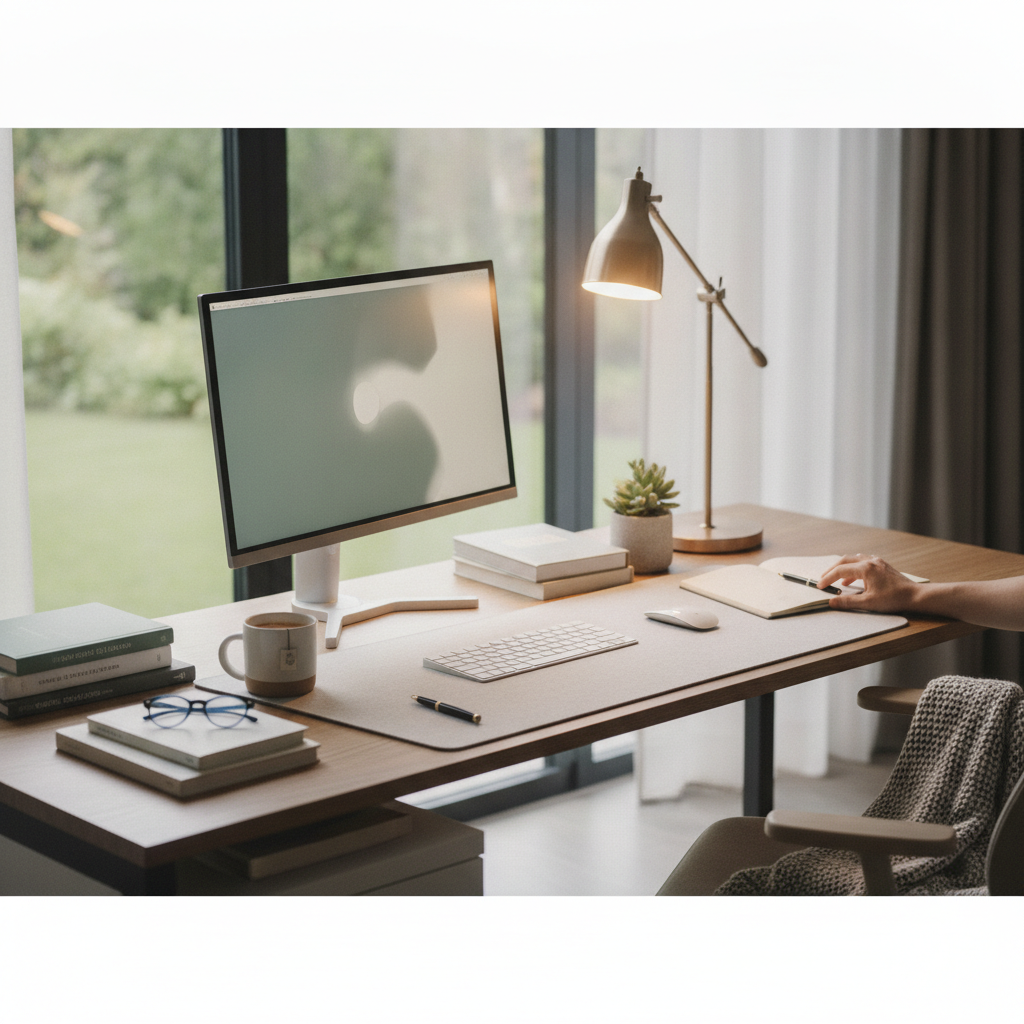
The space immediately surrounding your desk does more to determine your mental state than most people realize. Before you open a single app or check your first message of the day, your brain is already reading its environment — registering light levels, clutter, temperature, and scent — and adjusting your baseline mood and readiness accordingly. Small, intentional changes to that immediate zone can make the difference between a day that flows and one that feels like pushing through wet concrete.
Control Your Light Before Anything Else
Lighting is one of the most underestimated elements of desk setup. Natural light is best when you can position your desk to receive it without glare on your screen, but when that isn't possible, a dedicated task lamp with adjustable color temperature does real work. Warmer tones in the morning ease you into focus without overstimulating, while cooler, brighter light during midday supports sustained concentration. Brands like BenQ offer purpose-built monitor lights that reduce eye strain while illuminating the desk surface evenly. Getting this right typically costs less than a single evening out.
Clear the Surface the Night Before
A cluttered desk doesn't just look messy — it competes for your attention. Every stray item on your surface is a small, unresolved prompt asking your brain to register it, categorize it, and decide what to do with it. That's cognitive overhead before your actual work has even started. A simple end-of-day habit of resetting your desk to a clean baseline — papers filed or stacked, cables tucked, cups returned to the kitchen — means you sit down the next morning to a space that signals readiness rather than backlog. This single ritual has an outsized effect on morning momentum.
Anchor Your Space With a Single Physical Object
Choosing one meaningful object to anchor your desk can create a quiet sense of continuity and calm. This isn't about decorating — it's about giving your eye and attention a resting point that isn't a screen. A small plant like a pothos, a smooth stone from a memorable trip, or even a simple ceramic mug used only at your desk can function as a subtle psychological marker: this is your working space, and it belongs to you. The specificity of the object matters less than the consistency. Over time, simply seeing it can cue a focused mental state.
Use Scent as a Productivity Signal
Scent is processed differently than the other senses, and it has a direct line to mood and memory. Using a consistent scent — through a diffuser, a candle, or even a small jar of coffee beans — only during focused work time can gradually train your brain to associate that smell with concentration. Brands like Vitruvi make small stone diffusers that sit unobtrusively on a desk without becoming a distraction themselves. Peppermint and citrus tend to support alertness, while eucalyptus or cedar can help during longer, quieter work sessions. The key is consistency — the same scent, the same kind of work.
Manage Temperature in the Zones You Can Control
You may not control your office thermostat or the ambient temperature of a shared apartment, but you can control the microzone right at your desk. A small fan positioned nearby does more than cool you down — it provides gentle white noise and increases airflow, both of which support sustained attention. In cooler months, a lightweight blanket across the lap keeps circulation comfortable without overheating. These aren't luxuries; they're practical adjustments that reduce the low-grade physical discomfort that quietly drains focus throughout the day.
Give Your Ears a Deliberate Input
Background sound has a measurable effect on how long you can hold concentration, and leaving it to chance — street noise, household sounds, a television in another room — puts your brain in a reactive rather than settled state. Choosing your audio environment deliberately changes that. Apps like Brain.fm are designed specifically around cognitive states, offering soundscapes timed to focus, relaxation, or recovery cycles. Even a consistent playlist of instrumental music you already enjoy can work well. The point is intention — deciding what your ears receive rather than simply absorbing whatever's nearby.
Position Your Screen at the Right Distance and Height
Posture and screen placement affect mood indirectly but consistently. A screen that sits too low pulls the head forward, which compresses the neck and chest and subtly restricts breathing — all of which feeds into fatigue and irritability over time. A monitor arm or a simple stack of books can raise a screen to roughly eye level. Sitting closer than arm's length also creates a low-grade visual tension that accumulates through the day. These are small physical alignments, but they reduce the background discomfort that people often mistake for mental fatigue.
Separate Your Desk From Your Downtime Visually
When your desk is also your dining table, your gaming station, or your late-night scroll zone, your brain never fully commits to work mode when you sit there for focused tasks. Creating a visual transition — even something as simple as a specific desk mat you place down only during work hours, or a small lamp that signals "work time" when it's on — helps reinforce the distinction between effort and rest. IKEA's SKÅDIS pegboard system, for example, lets you quickly reorganize a wall-mounted setup between work and personal use without rearranging your whole room.
Your desk environment is already shaping your focus and mood whether you've designed it intentionally or not. The good news is that even one or two of these adjustments — better light, a cleared surface, a deliberate scent — can shift how a day feels within a week of consistent use. Start with whatever feels most manageable, and build from there. Small changes made consistently tend to compound in ways that larger, one-time overhauls rarely do.