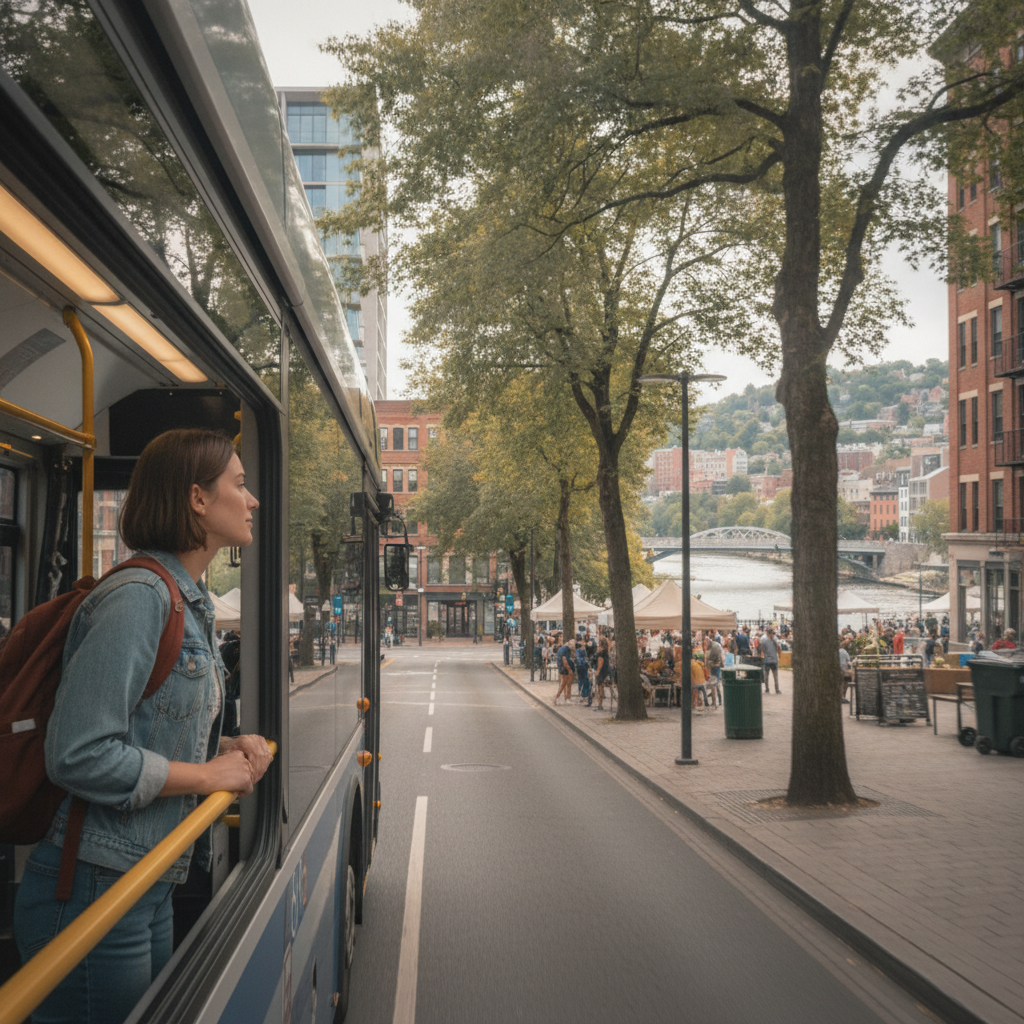
Some of the best days out don't involve a car, a rental, or a packed itinerary. They involve a transit card, a loose plan, and the willingness to follow a route somewhere you've never thought to go. Solo day trips by local bus, train, or subway are underrated — not because they're budget-friendly (though they are), but because they force a slower, more curious kind of travel that's easy to lose when you're behind a wheel.
If you've been putting off a solo day out because logistics feel complicated, or because you're not sure where to even start, these tips will help you build a trip that feels intentional rather than improvised.
Map Your Route Before You Commit to a Destination
Most people pick a destination and then figure out transit. Try flipping that. Pull up Google Maps or Citymapper and browse what's actually reachable from your home stop within, say, 45 to 90 minutes. You might discover a neighborhood, a waterfront, or a market district you've never seriously considered. Transit maps reveal the city differently than road maps do — they highlight hubs, not highways. Once you see what's genuinely accessible, picking a destination starts to feel exciting rather than logistical.
Give Yourself a Loose Theme, Not a Tight Schedule
A theme gives your day shape without boxing you in. Instead of booking three specific spots back-to-back, decide something broader: a morning focused on architecture, an afternoon at street-level markets, or a slow circuit through a single neighborhood like Brooklyn's Red Hook or Chicago's Pilsen. Themes let you stay flexible when a transit delay pushes your timing, or when you stumble onto something worth lingering over. A tight schedule turns delays into problems; a loose theme turns them into detours.
Load Your Transit App and Buy a Day Pass Early
This sounds obvious, but having everything sorted before you leave removes a surprising amount of friction once you're out. Download the local transit app — Transit App works across most North American cities and gives real-time arrivals — and check whether a day pass makes financial sense for your route. In most mid-to-large cities, if you're making more than three or four trips, a day pass pays for itself. Buy it before your first ride so you're not fumbling at a kiosk when a bus is pulling in.
Build In a Mid-Day Anchor Point
A solo day trip benefits from at least one fixed reference point in the middle of your day. This could be lunch at a specific food hall, a gallery you've been meaning to visit, or even a park bench in a neighborhood you want to absorb slowly. That anchor stops the day from feeling shapeless by early afternoon, which is when solo trips can quietly lose momentum. Everything before it becomes your morning exploration; everything after becomes your wind-down loop back toward home.
Know Your Connections Before You're Standing on a Corner
Transit connections — that transfer point between the subway and the bus that takes you the last mile — are where solo trips can unravel if you're not prepared. Spend five minutes before you leave studying the transfer spots on your route. Notice which stops are timed, which require walking a block, and where service gets sparse in the early evening. Apps like Moovit show you multi-leg trips in one view, which is genuinely useful when you're planning a route through an unfamiliar part of town and don't want to rely on cell signal.
Pack for Transit Rhythms, Not Tourist Convenience
Local transit travel has its own rhythm: bursts of walking, standing, sitting, then walking again. What you carry should reflect that. A lightweight daypack, a reusable water bottle, and a portable charger are the core essentials. Wear shoes you can walk a couple of miles in without thinking about it, because transit often drops you a few blocks from where you actually want to be. Skip the rolling bag entirely — nothing marks you as unprepared faster, and staircases in older transit systems are unforgiving.
Leave Gaps for the Unexpected
Over-scheduling a solo day trip is one of the most common ways to make it feel like work. Transit already introduces natural pauses — wait times, platform changes, a bus that runs slightly behind — and those pauses are actually useful. They're moments to look around, grab a coffee from a shop you'd never have noticed otherwise, or just sit and watch a neighborhood at street level. Build in at least one hour across your day with nothing assigned to it. That unscheduled hour is often where the best part of the trip happens.
Time Your Return Before It Gets Late
Transit frequency drops in the evening, especially on weekends, and the gap between a 7 p.m. bus and a 7:40 p.m. bus matters more when you're solo and tired. Check your return options before you leave — not just the last service of the night, but what the realistic window looks like around the time you'd want to head home. Aiming to be on your return trip by late afternoon gives you buffer. It also means you get home while you still have energy to actually reflect on the day rather than just collapse.
Building a solo day trip around local transit isn't a compromise — it's a different kind of travel that trades convenience for curiosity. The more you practice reading a transit map like a menu of possibilities, the easier it becomes to turn an ordinary Saturday into something genuinely worth remembering. Start small: pick one line, one unfamiliar neighborhood, one loose theme. The rest tends to take care of itself.