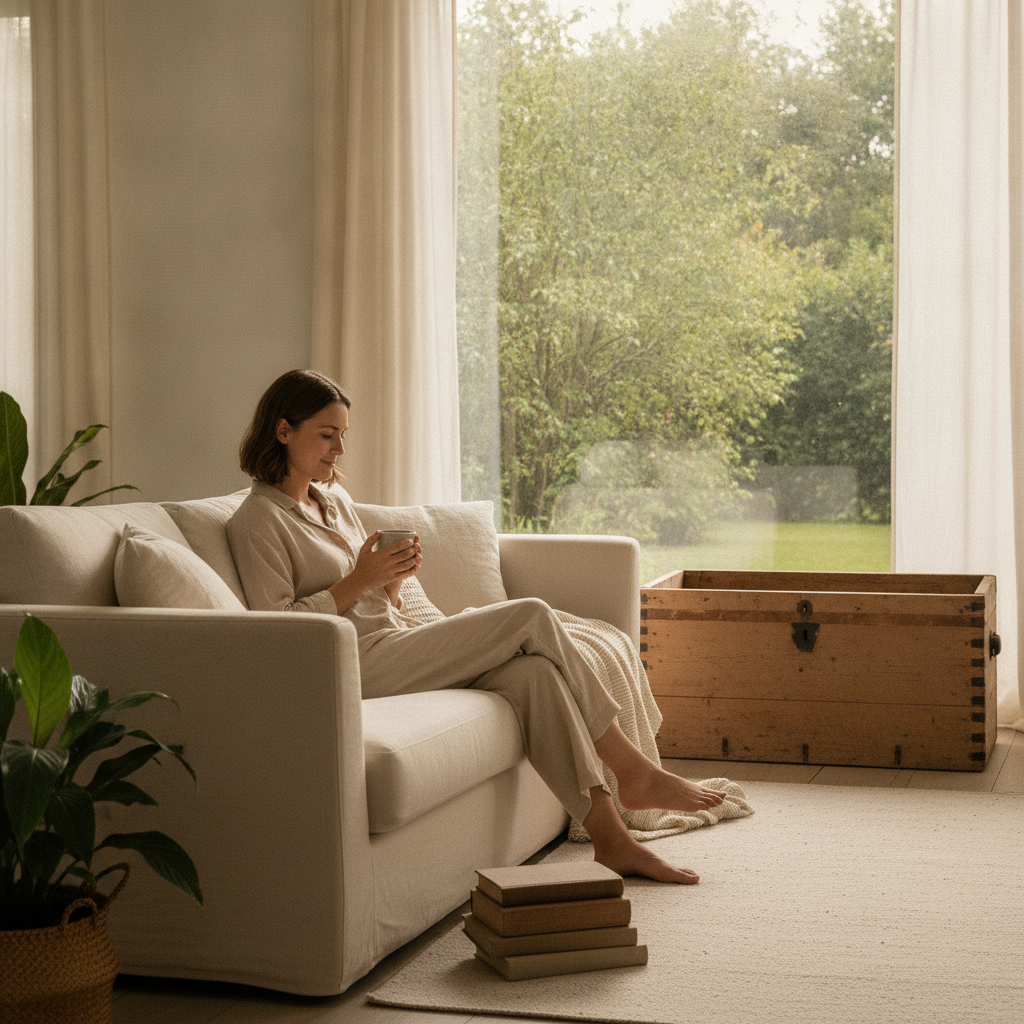
There's a particular kind of exhaustion that comes from lying awake long after you should be asleep — body tired, mind still running its circuits. You've tried the obvious fixes. You go to bed at a reasonable hour. You know screens aren't helping. And yet sleep still feels like something that happens *to* other people. The good news is that the solution rarely requires a cabinet full of supplements or a complete lifestyle overhaul. More often, it comes down to the hour or two before you close your eyes.
Evening rituals work because sleep isn't a switch — it's a gradual physiological process your body needs permission to enter. When you build consistent, calming cues into your night, you train your nervous system to recognize that rest is coming. Over time, those cues become powerful anchors. Here are some of the most effective ways to start building them.
Dim Your Lights an Hour Before Bed
Light is one of the most direct signals your brain uses to regulate melatonin production. Bright overhead lighting — especially the cool-toned LEDs common in most modern homes — tells your brain it's still midday. Switching to warm, low lamps in the evening is a small change that makes a measurable difference. Smart bulb systems like Philips Hue let you automate this shift so it happens without you thinking about it. Even something as simple as a salt lamp or a single bedside light can shift the mood of a room in ways your nervous system responds to.
Set a Consistent Cutoff for Screens
The argument against screens before bed has been well established for years, but most people treat it as an all-or-nothing rule they're already failing. A more useful approach is to pick a consistent cutoff time — say, 45 minutes before sleep — and protect that window. The issue isn't just blue light. It's the cognitive stimulation that comes with scrolling, responding, and consuming content. Your brain stays activated well after you put the phone down. Replacing that final hour with something lower-stakes, like reading a physical book or listening to a podcast through a simple speaker, lets your mind begin its natural deceleration.
Build a Transition Ritual That's Yours
A transition ritual is any short sequence of actions that signals the shift from your active day to your resting night. It doesn't need to be elaborate or expensive. Some people make a cup of herbal tea — Pukka's Night Time blend is a reliable choice — and drink it at the kitchen table without multitasking. Others wash their face slowly, moisturize, and let that physical routine become a mental one. The ritual itself matters less than the consistency. When the same sequence repeats night after night, your body starts winding down before you've even reached the pillow.
Cool Down Your Bedroom Temperature
Core body temperature naturally drops as you move into sleep, and a room that supports that drop helps you fall asleep faster and stay asleep longer. Most sleep researchers point to a range somewhere between 65 and 68 degrees Fahrenheit as optimal for most adults, though individual preference varies. If you don't have full control over your thermostat, small adjustments help — a fan, lighter bedding, or cracking a window in cooler months. The physical sensation of a cool room also reinforces the mental association between that environment and rest.
Write Down Tomorrow's Worries Tonight
One of the most common reasons people struggle to sleep is an overactive planning mind — the mental rehearsal of tasks, conversations, and concerns that cycles on repeat once the distractions of the day are gone. A simple written brain dump before bed can interrupt that loop. The idea isn't journaling for insight. It's offloading. You write down what's unresolved, what you need to remember, and what's bothering you, and in doing so, you give your brain permission to stop holding onto it. Apps like Day One work well for this, or a plain notebook on the nightstand does the job just as effectively.
Try Progressive Muscle Relaxation
Progressive muscle relaxation is a technique that involves tensing and releasing muscle groups systematically, moving from feet to head. It sounds clinical, but it's genuinely accessible and works well for people who feel physical tension without always recognizing it. The process takes about ten minutes and shifts your awareness from mental to physical, which is exactly what you need when your thoughts are loud. Guided versions are available through apps like Calm or Insight Timer, or you can follow a simple pattern on your own once you've done it a few times.
Anchor Your Morning Wake Time First
This one often surprises people because it's technically a morning habit. Your circadian rhythm is anchored by when you wake, not when you go to bed. If your wake time shifts by an hour or two depending on the day, your body never fully settles into a predictable sleep window. Choosing a consistent wake time — even on weekends — and protecting it creates the foundation that makes every other evening ritual more effective. Once your rhythm stabilizes, you'll notice that the desire to sleep arrives more naturally at a consistent hour, without forcing it.
Keep the Last 20 Minutes Genuinely Quiet
The final stretch before sleep deserves real stillness. Not a podcast half-listened to, not background television, not a quick check of the morning forecast. Those small inputs keep low levels of cognitive processing active when what you actually need is quiet. Some people find gentle stretching or a few minutes of slow breathing useful here. Others simply lie in a darkened room and let their thoughts settle without intervention. Either way, protecting this window — even briefly — gives your nervous system the space to complete its wind-down without interference.
Building better sleep through evening rituals is genuinely incremental work. You don't need to overhaul your entire night at once. Pick one of these approaches, practice it consistently for a week or two, and notice what shifts. Small changes, repeated reliably, have a way of compounding into something that finally feels like rest.