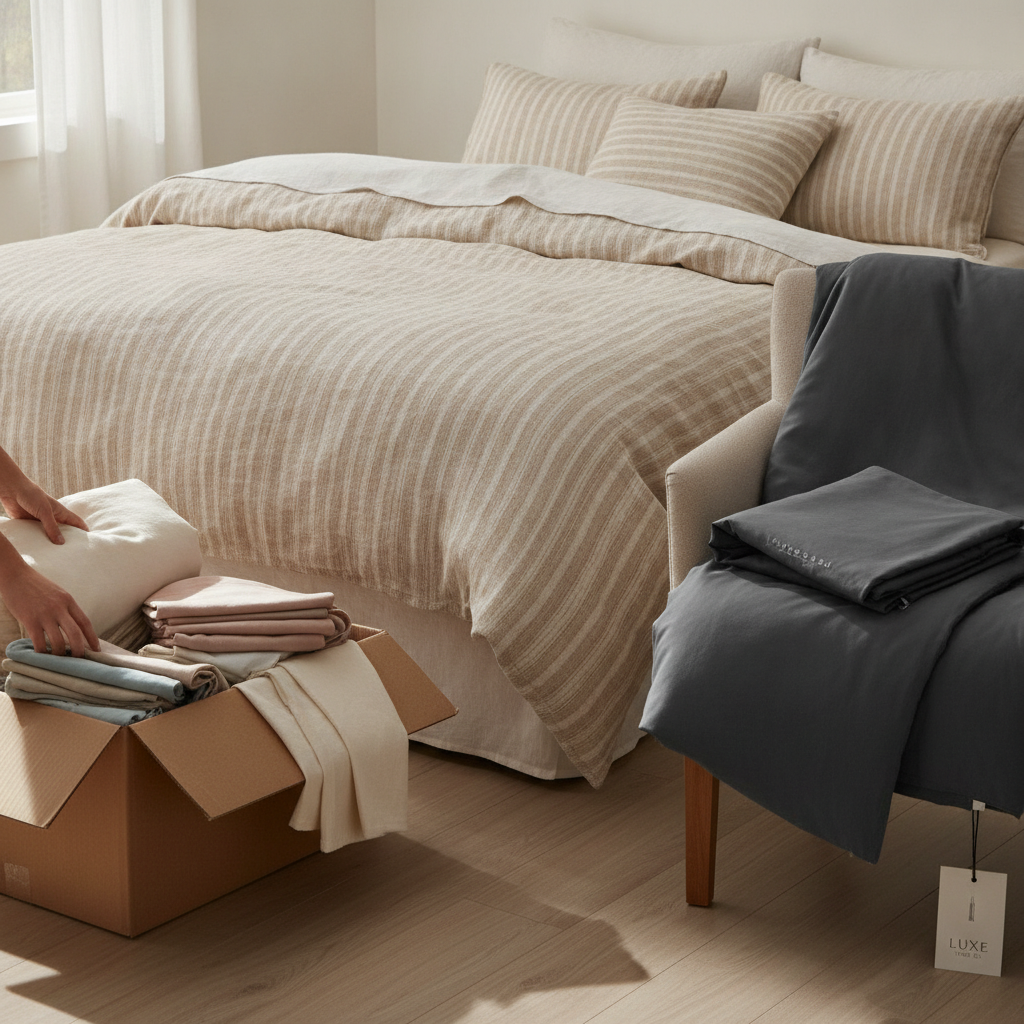
The fabric in your bedding doesn't know what brand name is printed on its packaging. What determines how a sheet feels against your skin — its thread count, weave structure, fiber origin, and finishing process — is decided long before any lifestyle brand attaches its logo and triples the price. Understanding this simple fact opens up a smarter way to shop for one of the most used items in your home.
How Does Wholesale Textile Sourcing Actually Work?
Most premium bedding brands don't manufacture their own fabric. They source finished textiles from the same mills in Portugal, India, Turkey, and China that supply wholesale linen and cotton to retailers worldwide. The difference between a $200 duvet cover and a $60 one from a wholesale supplier often comes down to marketing spend, influencer partnerships, and beautifully designed packaging — not the thread, not the loom, and not the hand feel. When you buy directly from a wholesale textile supplier, you're accessing the same supply chain without paying for the brand's overhead.
What to Look for in a Wholesale Supplier
Reputable wholesale platforms like Alibaba, Faire, and Global Sources allow you to filter textile suppliers by fabric certification, minimum order quantities, and verified buyer reviews. You don't need to order in bulk to benefit — many suppliers on Faire, in particular, now cater to smaller buyers and individual consumers alongside boutique retailers. Look for suppliers who list their fiber composition clearly (100% linen, GOTS-certified organic cotton, or stonewashed French flax are all meaningful markers), and who provide fabric weight in grams per square meter rather than the notoriously unreliable thread count metric.
Why Does Thread Count Marketing Mislead Most Shoppers?
Thread count became a consumer shortcut in the late twentieth century, but it was never a reliable quality indicator. A sheet woven from multi-ply threads can artificially inflate its thread count while feeling coarse and pill-prone after a few washes. Meanwhile, a 200-thread-count single-ply percale cotton from a reputable Turkish mill will outlast and outperform a 600-count sheet made from shorter-staple fibers.
Wholesale suppliers typically describe their fabrics using more honest metrics: GSM weight, staple length, and weave type. When you start reading these specifications instead of thread count claims, you make better decisions almost immediately. Lifestyle brands rely on thread count because it's easy to advertise; wholesale suppliers use technical descriptions because their buyers know what they're actually looking for.
When Is the Best Time to Buy Bedding From Wholesale Channels?
Timing matters. The traditional white sale period — January through early February — remains one of the most reliable windows for finding reduced wholesale minimums and clearance pricing from textile suppliers clearing end-of-season stock. A second opportunity typically opens in late July and August, when suppliers transition between northern hemisphere summer and autumn production runs.
If you're outfitting a guest room, replacing a worn duvet cover set, or simply refreshing your sleep setup for the cooler months ahead, placing wholesale orders in early January or late July puts you ahead of the retail cycle. You get access to the same fabric quality that lifestyle brands will mark up and sell at full price through autumn, and you buy it before that markup is applied.
How to Use Seasonal Cycles to Your Advantage
Set price-drop alerts on Faire or bookmark supplier pages on Alibaba for the fabric types you want. Many wholesale suppliers also run clearance promotions during Chinese New Year production pauses in late January and early February, when factories are between runs. This is a practical window to request fabric samples, compare GSM weights, and place small test orders before committing to a larger purchase for a full bedroom refresh.
What Are the Real Quality Differences Between Linen and Cotton?
Linen and cotton serve different needs, and understanding the distinction helps you spend more precisely. Linen, woven from flax fibers, is naturally thermoregulating — it stays cooler in warm months and warms up in winter without trapping heat the way synthetic blends do. It softens with every wash rather than degrading, which makes it a genuinely long-term investment. Cotton, particularly long-staple varieties like Egyptian or Supima, offers a smoother and more uniform hand feel, making it the preferred choice for crisp percale or silky sateen finishes.
Wholesale suppliers carry both in their standard ranges. The same stonewashed linen that Cultiver or Parachute sells at a premium is available from certified Portuguese or Lithuanian mills through wholesale channels at a fraction of the retail price. The fiber is identical. The weave is identical. What you're skipping is the cost of the brand's aesthetic curation and its digital advertising budget.
How Do You Start Buying Bedding This Way?
The practical starting point is ordering fabric samples before committing. Most reputable wholesale suppliers on platforms like Faire or Global Sources will send physical swatches for a nominal fee, sometimes free. Order samples of two or three GSM weights in your preferred fiber — a 155 GSM linen and a 185 GSM linen, for instance — wash them once, and let your hands make the decision. This small upfront step replaces the guesswork that brands charge you to skip.
Once you've identified a supplier whose fabric meets your standard, reordering is straightforward and consistently priced. You're no longer at the mercy of a brand's seasonal collection or a retailer's markup cycle. Your bedding becomes a practical, repeatable purchase rather than a lifestyle aspiration with an inflated price tag attached.
Switching how you buy bedding is a small change that compounds over time. Better fabric, longer lifespan, and a lower price per wash cycle — it's a quiet upgrade that costs less and delivers more. Start with one sample order and let the fabric speak for itself.