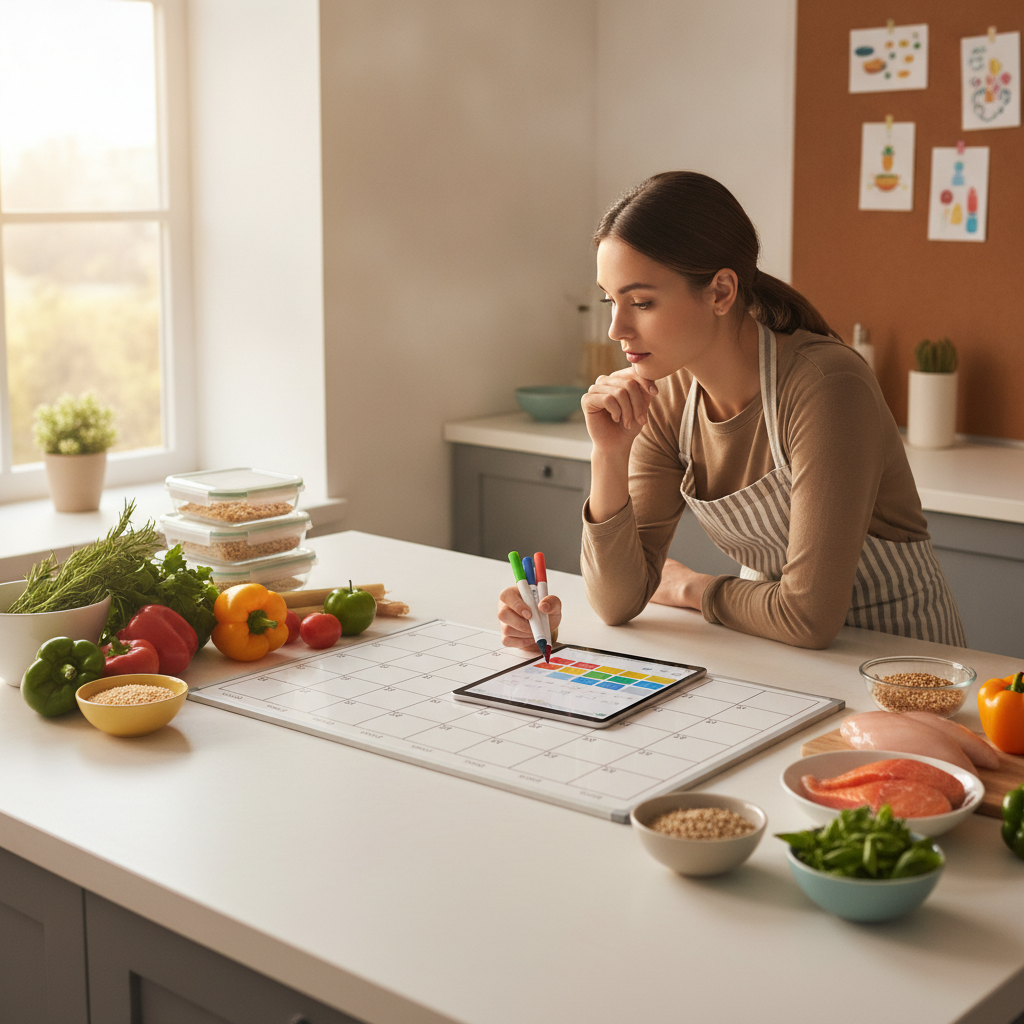
Meal planning has a reputation problem. For most people, it sits somewhere between filing taxes and reorganizing a junk drawer — something that feels necessary but deeply uninspiring. You sit down on a Sunday, stare at a blank notepad or an empty app screen, and try to summon seven dinners from thin air. The result is either a rigid, joyless schedule you abandon by Wednesday, or a loose list that doesn't account for what you already have, what's actually in season, or how your week is likely to unfold.
The shift that changes everything is surprisingly simple: stop treating meal planning as a logistics task and start treating it as a design problem. Designers work within constraints, prioritize function alongside enjoyment, reduce waste by being intentional about materials, and build systems that are flexible enough to adapt without falling apart. Applied to your kitchen, that same mindset produces meals that are more nutritious, grocery trips that cost less, and a fridge that doesn't quietly compost itself by Thursday.
Start With What You Already Have
Before you open Mealime or flip through a cookbook, do a quick audit of your fridge, freezer, and pantry. Most households carry more usable ingredients than they realize — a can of white beans, half a bag of lentils, frozen chicken thighs, a bunch of wilting kale that still has two good days left. Designing your week around what already exists reduces waste before it starts and often cuts your grocery bill noticeably. Think of this step as setting your design constraints. You're not starting from a blank page; you're working with a palette that already has colors on it.
Build Around Ingredient Anchors, Not Individual Recipes
A common planning mistake is selecting five separate recipes that each require different sets of ingredients, most of which you'll only partially use. A smarter approach is to choose two or three anchor ingredients — say, a whole roasted chicken, a batch of brown rice, and a large portion of roasted root vegetables — and then design multiple meals around them across the week. The chicken becomes dinner one night, a grain bowl the next, and a simple soup by midweek. This approach is how professional cooks think, and it's why restaurant kitchens generate far less waste than home kitchens. Brands like Rancho Gordo sell dried beans in bulk precisely because ingredient-first cooking rewards pantry depth over recipe specificity.
Map Your Week's Energy Before You Plan
Not every evening has the same capacity for cooking, and pretending otherwise leads to abandoned plans and last-minute delivery orders. Before you write a single meal down, look at your week. Which evenings are back-to-back with commitments? Which nights do you actually have an hour and the mental bandwidth to enjoy cooking? Assign simpler, lower-effort meals — a grain bowl, a good omelet, a quick pasta with pantry staples — to your heavier days, and save anything that requires more attention for nights when you'll genuinely enjoy the process. Matching meal complexity to your real schedule is a design principle: form follows function.
Design for Deliberate Overlap
Overlap is the engine of an efficient meal plan. When you roast a sheet pan of vegetables on Sunday, those vegetables shouldn't appear in just one meal — they can anchor a weeknight grain bowl, fill a wrap for lunch, or bulk up a quick frittata. Cooking a large portion of farro or quinoa at the start of the week gives you a neutral base that absorbs whatever flavors you pair it with on any given night. The key is thinking in components rather than completed dishes. Apps like Paprika let you save component-style recipes alongside full dishes, which helps you visualize where the overlap lives before you commit to a grocery list.
Constrain Your Protein Choices to Two or Three Per Week
Protein variety sounds appealing in theory, but it's one of the biggest drivers of both food waste and grocery overspending. When you buy five different proteins for five different recipes, you're almost guaranteed to end up with leftovers that don't fit anywhere else in the week's plan. Choosing two, maybe three, proteins and rotating them across different preparations keeps costs predictable and dramatically reduces the chance of anything going unused. A family-size pack of salmon can become a baked fillet one night and salmon cakes two days later — different textures, different flavors, zero waste.
Let Seasonal Produce Set the Nutritional Direction
Instead of planning meals first and then hunting for produce to match, flip the order. Walk through a farmers market or check what's featured at Trader Joe's or your local co-op, and let what's freshest and most affordable guide your nutritional choices for the week. Seasonal produce is not only better priced — it's also at peak nutrient density, which matters for long-term health in ways that off-season imports simply can't replicate. Eating with the season also naturally rotates your diet across a broader range of vitamins and minerals without requiring you to track anything or follow a specific plan.
Build One Flexible Wildcard Meal Into Every Week
Rigid plans create their own kind of failure. Something always shifts — a work dinner appears, someone isn't hungry, the leftovers from Tuesday are better than expected and become Wednesday's dinner. Building one intentionally blank or wildcard meal slot into your weekly plan gives you a built-in pressure valve. It might become a fridge-clearing stir-fry, a breakfast-for-dinner moment, or a well-deserved takeout night. The point is that you've accounted for flexibility from the start, which means the plan bends instead of breaks when real life intervenes.
Write One Consolidated List, Organized by Store Section
A fragmented grocery list — ingredients scattered across a notes app, a few things remembered at the door, two items scribbled on a receipt — is how things get forgotten, doubled up, or skipped entirely. Once your plan is set, write a single organized list grouped by section: produce, proteins, grains and dry goods, dairy, frozen. This isn't about being obsessive; it's about reducing friction at the store so you move efficiently and don't get pulled toward the impulse displays near the checkout. Tools like AnyList or even a simple formatted note on your phone make this fast and reusable week to week.
Approaching meal planning as a design challenge rather than a recurring obligation changes the texture of the whole experience. You're not just filling a schedule — you're building a system that works with your actual life, respects your ingredients, and delivers better nutrition with less effort over time. Start small. Pick one anchor ingredient this week, map your evenings honestly, and build from there. The system will sharpen itself the more you use it.