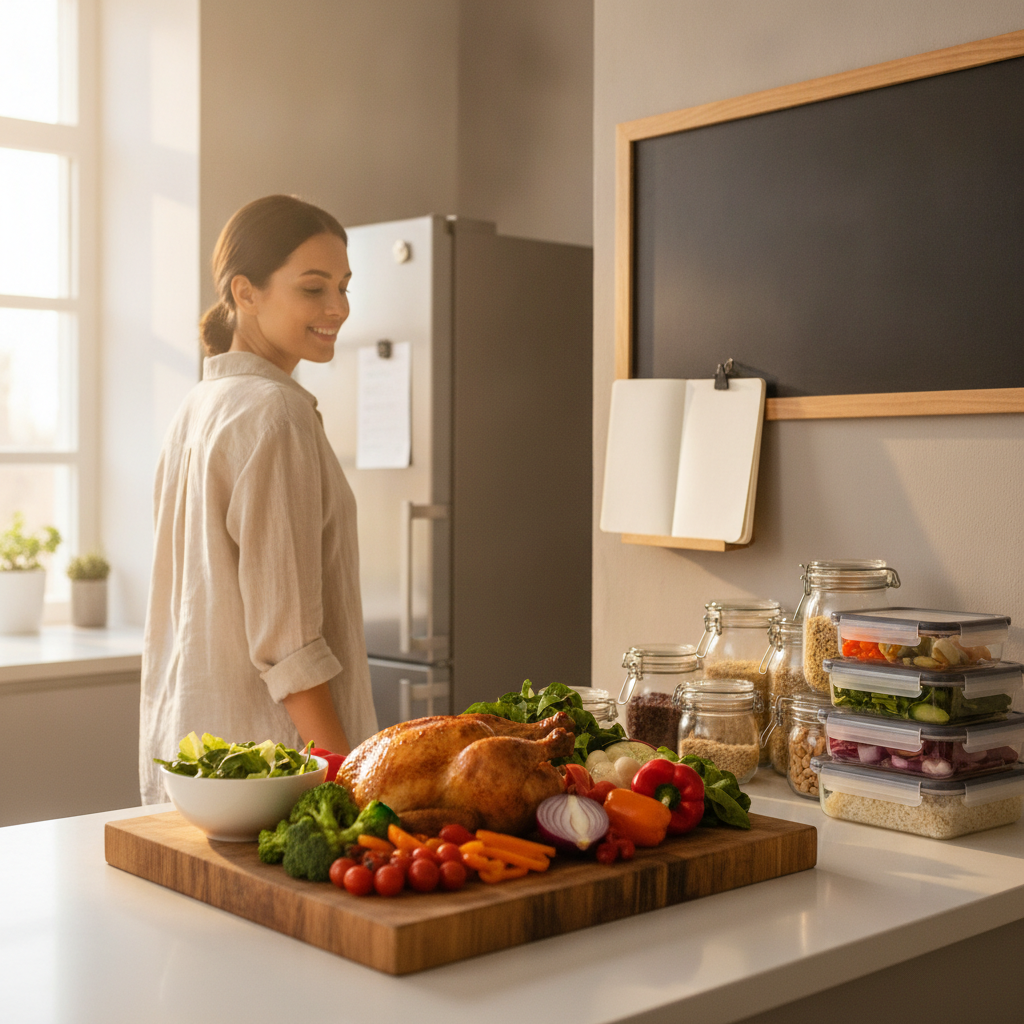
Most people approach grocery shopping as a response to hunger rather than a plan for the week. You wander the aisles, pick up whatever looks good, and end up with a refrigerator full of ingredients that don't quite connect — half a bunch of cilantro, a can of chickpeas, and two chicken thighs that somehow never become a meal. The result is predictable: food gets wasted, takeout fills the gap, and Sunday evening finds you staring at your phone trying to figure out what to eat tomorrow. There's a quieter, more sustainable approach, and it starts with one simple structural shift.
Choose One Protein as Your Weekly Anchor
An ingredient anchor is exactly what it sounds like — a single central ingredient that anchors your cooking decisions for the week. Rather than planning five separate meals with five disconnected shopping lists, you choose one protein or base ingredient and build from there. Chicken thighs, a whole salmon fillet, dried lentils, or a block of firm tofu can each stretch across multiple meals with minimal additional shopping. This single decision eliminates a surprising amount of mental overhead throughout the week, because at least one variable is already solved before you walk into the store.
Map Your Anchor Across Three to Four Uses
Once you've chosen your anchor ingredient, the goal is to identify three or four distinct ways it can appear across the week without feeling repetitive. A batch of roasted chicken thighs might become a grain bowl on Monday, a taco filling on Wednesday, and a quick soup by Thursday using the leftover pan juices. Apps like Paprika or Whisk make it easy to collect and organize these use cases by ingredient. The discipline here isn't about rigid meal planning — it's about creating a flexible scaffold so your cooking decisions feel guided rather than invented from scratch every evening.
Shop for Bridges, Not Complete Meals
With your anchor identified and your rough use cases sketched out, you only need to shop for what connects the meals — the bridges. These are the aromatics, grains, canned goods, and fresh produce that make your anchor ingredient work across different preparations. A bag of rice, a few limes, some canned tomatoes, and a handful of greens from a store like Trader Joe's or your local co-op can do a lot of heavy lifting across a week. This approach keeps your cart focused and your spending tighter, because you're buying ingredients with known destinations rather than filling the cart with optimistic intentions.
Set a Standing Shop Day and Stick to It
Reactive shopping — running to the store mid-week because you didn't plan ahead — is one of the most reliable drivers of both food waste and overspending. Setting a single weekly shop day, ideally Sunday or Monday, creates a rhythm your habits can actually form around. You shop once, you know what you have, and you work from that inventory rather than layering new purchases on top of forgotten ones. Even if the standing shop day occasionally shifts by a day, having it as a default removes the low-grade decision pressure of figuring out when you'll shop on top of figuring out what to buy.
Keep a Running Inventory of What You Already Have
A significant portion of household food waste comes not from carelessness but from forgetting what's already in the pantry. Before you build your weekly anchor plan, spend five minutes scanning your shelves, freezer, and fridge. A simple notes app or a whiteboard on the inside of a cabinet door works better than most people expect. You'll often find that your anchor ingredient is already there, waiting — a can of white beans, a bag of frozen shrimp, or half a block of cheese that can anchor three meals if you let it. The inventory step turns overlooked ingredients into starting points.
Treat Herbs and Aromatics as Shared Infrastructure
Fresh herbs are among the most wasted items in the average kitchen because they're bought for a single recipe and then forgotten. Reframing them as shared infrastructure — ingredients that belong to the whole week rather than one dish — changes how you use them. A bunch of flat-leaf parsley bought for a grain bowl on Monday can show up in a yogurt sauce on Wednesday and a quick omelet on Friday. The same logic applies to ginger, garlic, lemons, and scallions. Buying them once and using them deliberately across the week is one of the most practical ways to reduce waste without much visible effort.
Batch One Component, Not the Whole Meal
Full meal prep — cooking five complete dishes on a Sunday afternoon — works for some people but creates burnout for many others. A more sustainable middle ground is batching a single component: a pot of grains, a tray of roasted vegetables, or a basic sauce. That one batch quietly does its job in the background, giving you a ready element to pull from without locking you into eating the same thing five nights in a row. Instant Pot or a standard Dutch oven makes grain batching fast enough to happen passively while you're doing something else.
Review and Reset at the End of Each Week
The final piece of the system is a brief weekly reset — five minutes on the last day of your cooking week to look at what got used, what got wasted, and what you'd do differently. This isn't about self-criticism; it's about refining the system until it fits your actual life rather than an idealized version of it. Over time, the reset reveals patterns: which anchors work best for your schedule, which bridges you always have on hand, and which ambitious ingredients never quite make it into a meal. That feedback loop is what turns a rough strategy into a reliable one.
The shift from reactive shopping to an anchor-based system doesn't require a personality overhaul or a perfectly curated pantry. It just asks you to make one decision earlier in the week so that dozens of smaller decisions later become easier. Start with a single anchor this week — one ingredient, three rough uses, one focused shop — and see how much quieter the week feels from there.