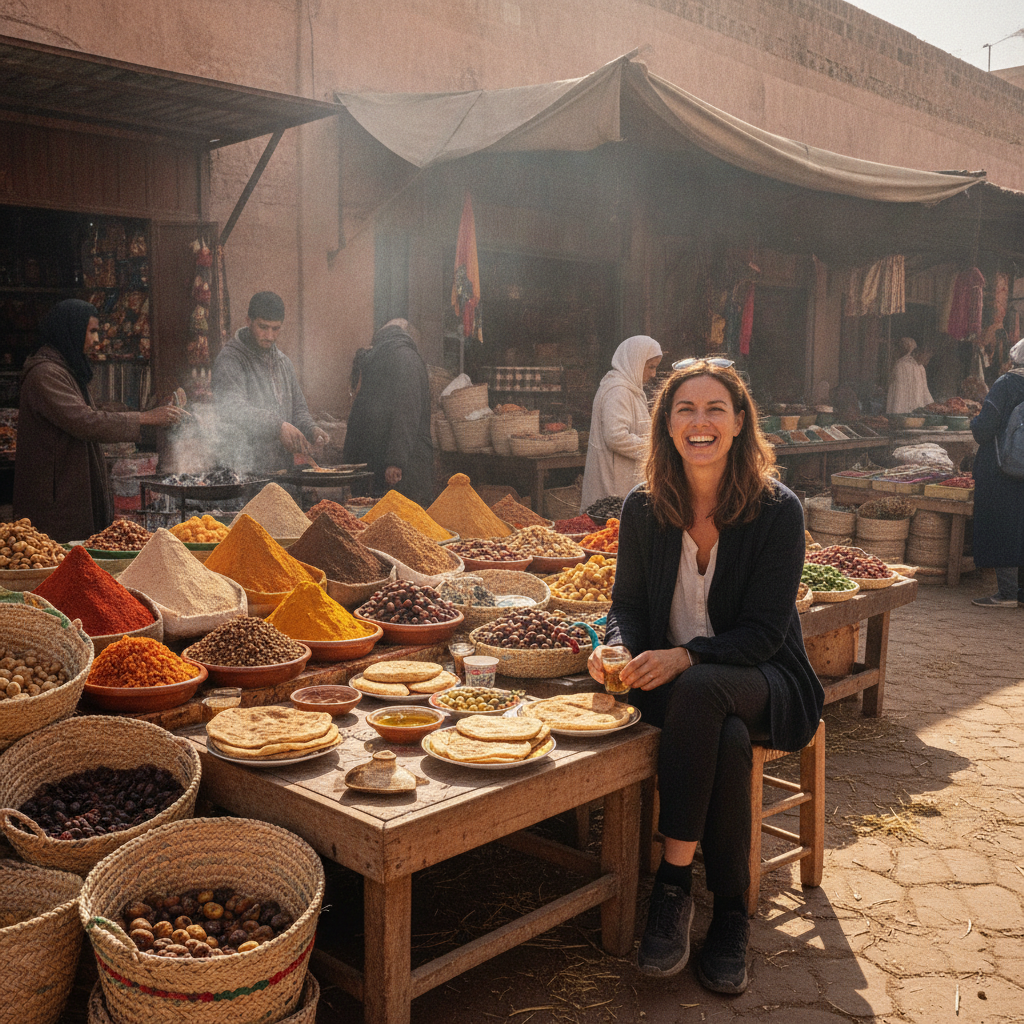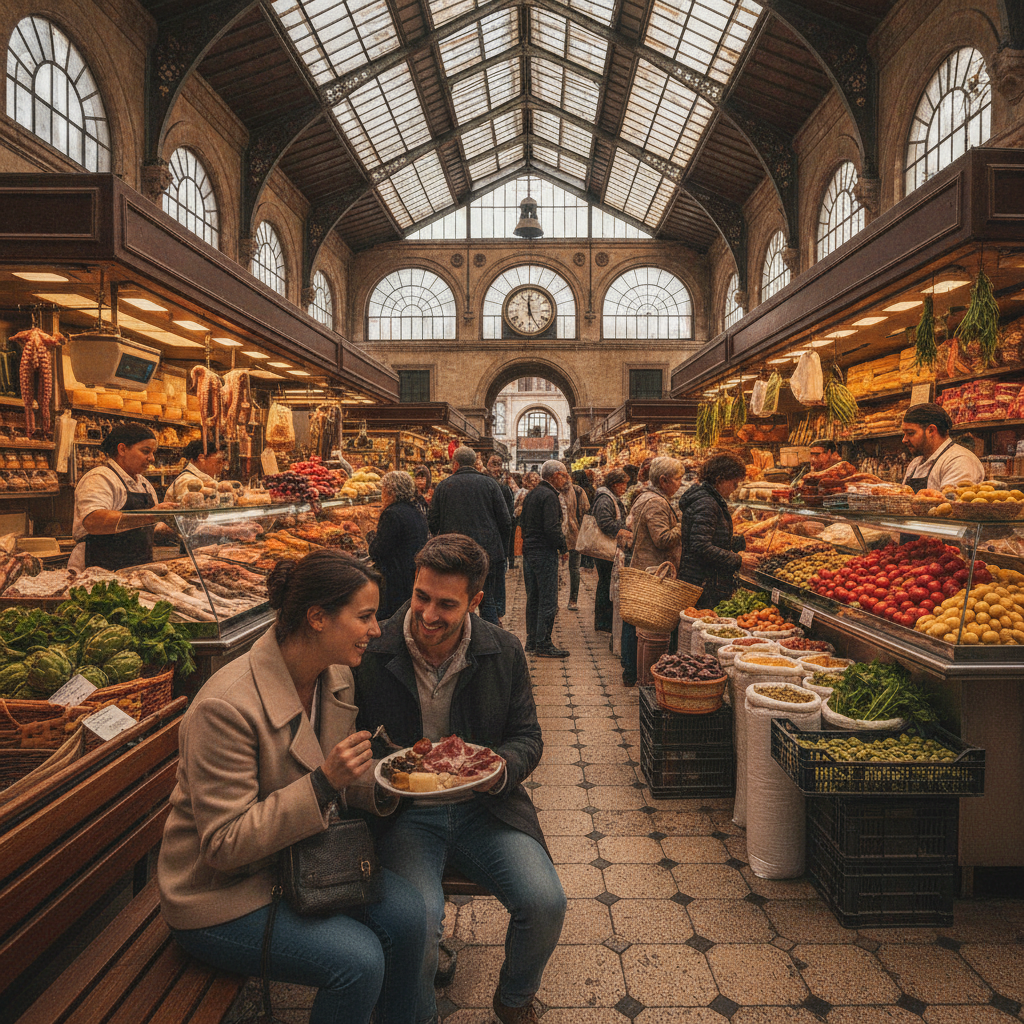
There is a particular kind of traveler who arrives in a new city, books a table at a well-reviewed restaurant, and leaves satisfied but only partially informed. The meal was good. The service was fine. But the experience was curated, filtered through someone else's decisions about what a visitor should taste, in what order, at what price. The covered market offers something different — noisier, less comfortable, and far more revealing.
What a Market Reveals That a Menu Cannot
A city's covered market — what the Spanish call a *mercado*, the French a *marché couvert*, and the Turks a *çarşı* — is not designed for visitors. That is precisely its value. The vendors arrive before dawn, the regulars appear by eight, and the rhythms of a morning unfold without any awareness that a traveler might be watching. Watching is exactly what produces understanding. The way a fishmonger sorts his catch by size, or how a cheese seller wraps portions in paper for a customer who has clearly bought the same amount every week for years — these details tell a food story that no tasting menu can replicate.
The Economics of Eating at the Source
Spending a full day in a market rather than cycling through restaurants carries an obvious financial logic. A portion of *jamón ibérico* sliced to order at Barcelona's Mercat de Sant Josep de la Boqueria costs a fraction of what a restaurant charges for the same cut as part of a charcuterie board. Olives, pickled vegetables, fresh bread, aged cheeses — bought directly and eaten standing at a counter or on a nearby bench, these form a meal that is both cheaper and more textured than any sit-down alternative. The savings are not trivial. A market day, even with liberal grazing, typically costs less than a single mid-range dinner.
Reading a Culture Through What It Preserves and Sells
Markets archive a region's culinary identity in ways restaurants have largely abandoned. A vendor selling dried herbs gathered from a specific mountain range, or a butcher offering cuts that never appear on a modern menu, preserves knowledge that would otherwise disappear quietly. Istanbul's Kapalıçarşı district, for instance, still carries spice merchants whose stock reflects trade routes that predate the Ottoman Empire. Walking those aisles is not nostalgia — it is a living record. The things a culture preserves and sells at the source reveal what it actually values, not what it has learned to present to outside audiences.
The Slow Conversation as Cultural Exchange
Restaurants optimize for turnover. Markets, by contrast, run on a different social contract. A vendor with no queue will often talk at length about the provenance of a product, the season's quality, how something is best prepared. This informal exchange — what anthropologists call *commensality*, the social dimension of sharing food — happens more freely at a market stall than at a restaurant table. A question about how to cook a particular dried bean variety, asked at a stall in Lyon's Halles Paul Bocuse, can produce a ten-minute conversation that reframes an entire understanding of regional French cooking. The knowledge transferred is free. The connection is genuine.
How a Market Day Structures Itself Naturally
A well-spent market day has its own informal architecture. Early hours belong to observation — watching the vendors set up, noticing which stalls draw the sharpest regulars, identifying the products that sell out fastest. Mid-morning is the time for tasting and small purchases, when vendors are most engaged and the crowd is dense enough to feel the market's full energy without being overwhelming. By early afternoon, the pace slows, prices on perishables sometimes drop, and the conversations lengthen. The day does not need an itinerary. The market provides its own structure to those patient enough to follow it.
Practical Habits That Make a Market Day Work
A few habits make the difference between a productive market day and an aimless one. Arriving without a fixed list allows for discovery — buying what looks exceptional rather than searching for something predetermined. Carrying small bills in local currency removes friction at every transaction. Bringing a compact bag means there is room to accumulate without the awkwardness of juggling multiple paper parcels. The Naschmarkt in Vienna, for example, rewards this kind of open-ended approach far better than a visit made with a specific shopping goal. Eating progressively through the morning — a piece of bread here, a slice of something cured there — keeps hunger from making decisions impulsively and spreads the tasting across the full breadth of what the market offers.
Returning to the Original Observation
The traveler who spent the evening at a well-reviewed restaurant left with a pleasant memory and a receipt. The one who spent the day at the covered market left with something harder to name but more durable — a sense of how people in that city feed themselves when no one is performing for them. The market is not a substitute for a great meal. It is the context that makes every meal in that city, before and after, more fully understood. You carry that knowledge home with you, and it changes how you think about food in your own city, at your own table, long after the trip is over.