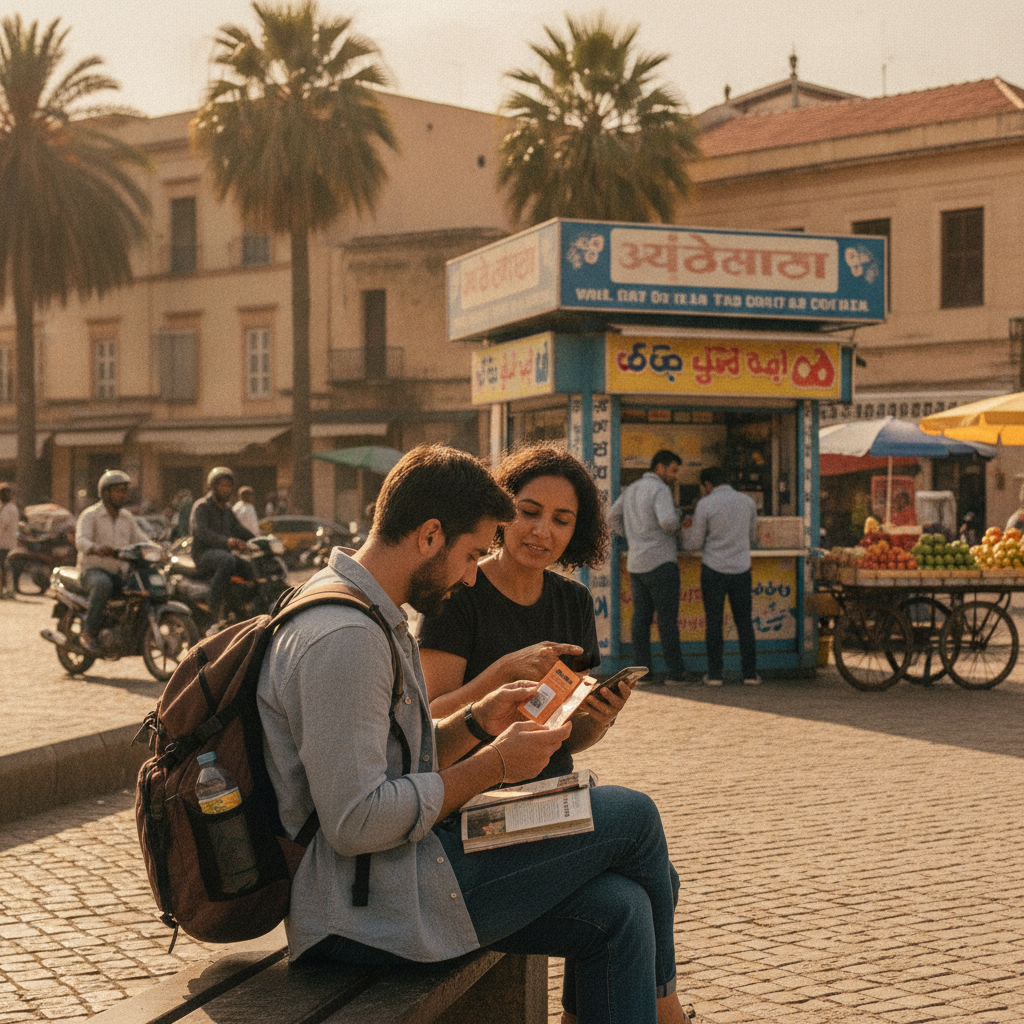
The way you connect to a country the moment you arrive shapes more of your experience than most travelers expect. That first hour — phone in hand, airport Wi-Fi stuttering, a roaming bill quietly ticking — sets a tone. And the instinct most people follow, which is to sort out a SIM card before they leave home, turns out to be one of the more expensive and limiting decisions a traveler can make.
Head Straight Past the Airport SIM Kiosks
Airport SIM kiosks exist to solve an urgent problem for disoriented arrivals, and they price accordingly. You'll typically pay a significant premium compared to what the same network provider charges in a city-center shop or a neighborhood convenience store. The packaging is often the same; the markup is simply baked into the captive-market location. Grabbing a coffee and using the airport's free Wi-Fi to find your transport into the city is almost always the better first move. The fifteen minutes you wait to sort connectivity will pay for itself quickly.
Use Offline Tools to Bridge the Gap Comfortably
The anxiety around arriving without a working SIM often comes down to not having a plan for the first hour. Pre-loading offline maps through Maps.me or Google Maps before you fly removes most of that pressure. WhatsApp and iMessage both function over Wi-Fi, so your family still knows you landed safely. If you've already downloaded your transport app, your hotel address, and a rough idea of the neighborhood layout, the gap between touchdown and sorted SIM feels entirely manageable rather than stressful.
Find the Neighborhood Shop Instead of a Brand Flagship
In most cities — Bangkok, Lisbon, Mexico City, Nairobi — the best SIM deals aren't found in the slick flagship stores of the main carriers. They're found in small electronics shops, pharmacies, and convenience chains a few blocks from the tourist center. These sellers often stock multiple carriers and can tell you honestly which network has better coverage in the area you're staying. That conversation alone is valuable. You learn something about the city's layout and which parts of it have reliable signal before you've unpacked.
Compare Prepaid Plans on the Ground With Real Context
Buying a SIM at home through a travel brand means making a decision based on a website's comparison table with limited local knowledge. Buying locally means you can ask which plan actually works in the mountains to the north, or whether the cheaper carrier drops signal on the metro. Locals and shop staff answer those questions fluently because they live with them. In Japan, for example, asking at a Don Quijote or a local electronics retailer versus buying an airport tourist SIM often means doubling your data allowance for a lower price.
Notice What Apps and Services Residents Actually Use
When you're standing in a shop sorting your SIM, you're also watching how people around you interact with their phones, which apps are advertised on shop walls, and what services the staff casually recommend. In some countries, ride-hailing runs through a local app rather than Uber. In others, mobile payment systems are deeply embedded in daily life and you'll want to set up the right wallet before your first market visit. That ambient observation — which only happens when you're physically present and engaged — gives you a more accurate map of daily life than any travel blog written from the outside.
Factor in the Actual Cost Difference Honestly
International roaming plans from home carriers and pre-departure travel SIM providers often look affordable until you do the math against local prepaid options. A seven-day prepaid plan from a local carrier in Colombia, Greece, or Vietnam frequently offers substantially more data at a fraction of the price. The difference is often enough to cover a good meal or a day's worth of local transport. Over a two-week trip, that gap compounds. Frugal travel isn't about deprivation — it's about redirecting money toward experiences rather than convenience premiums.
Let the SIM-Sourcing Process Become a First Local Errand
There's a quiet confidence that comes from completing a practical task in an unfamiliar place. Finding a working SIM on your own — reading street signs, working out which shop looks right, negotiating politely in a language you barely speak — puts you into resident mode faster than anything a tour operator can arrange. It's a low-stakes, high-reward way to start a trip. You return to your accommodation having solved something real, with a receipt in a language you didn't know before today and a pocket-sized window into how the city actually functions.
Keep a Small Wi-Fi Backup Strategy Just in Case
Even with a local SIM sorted, it's worth knowing where reliable public Wi-Fi clusters tend to exist in most cities — major transit hubs, chain cafés like a local equivalent of a Starbucks, public libraries, and municipal squares. Some cities have invested heavily in free public networks, and knowing that before you arrive means a dropped SIM or unexpected data cap doesn't strand you. Pocket Wi-Fi devices are another fallback worth researching if you're traveling somewhere with notoriously patchy prepaid coverage or if you're sharing connectivity with a travel companion.
The broader direction here is worth watching. eSIM technology is making local SIM sourcing easier rather than harder — you can now switch to a local carrier's prepaid eSIM plan without swapping a physical card, which means the airport kiosk becomes even less relevant. At the same time, more cities are expanding free public Wi-Fi infrastructure, giving short-stay travelers breathing room when they first arrive. The travelers who stay curious about how residents actually manage daily connectivity will always find better options than those who solve the problem before they've even seen the place.