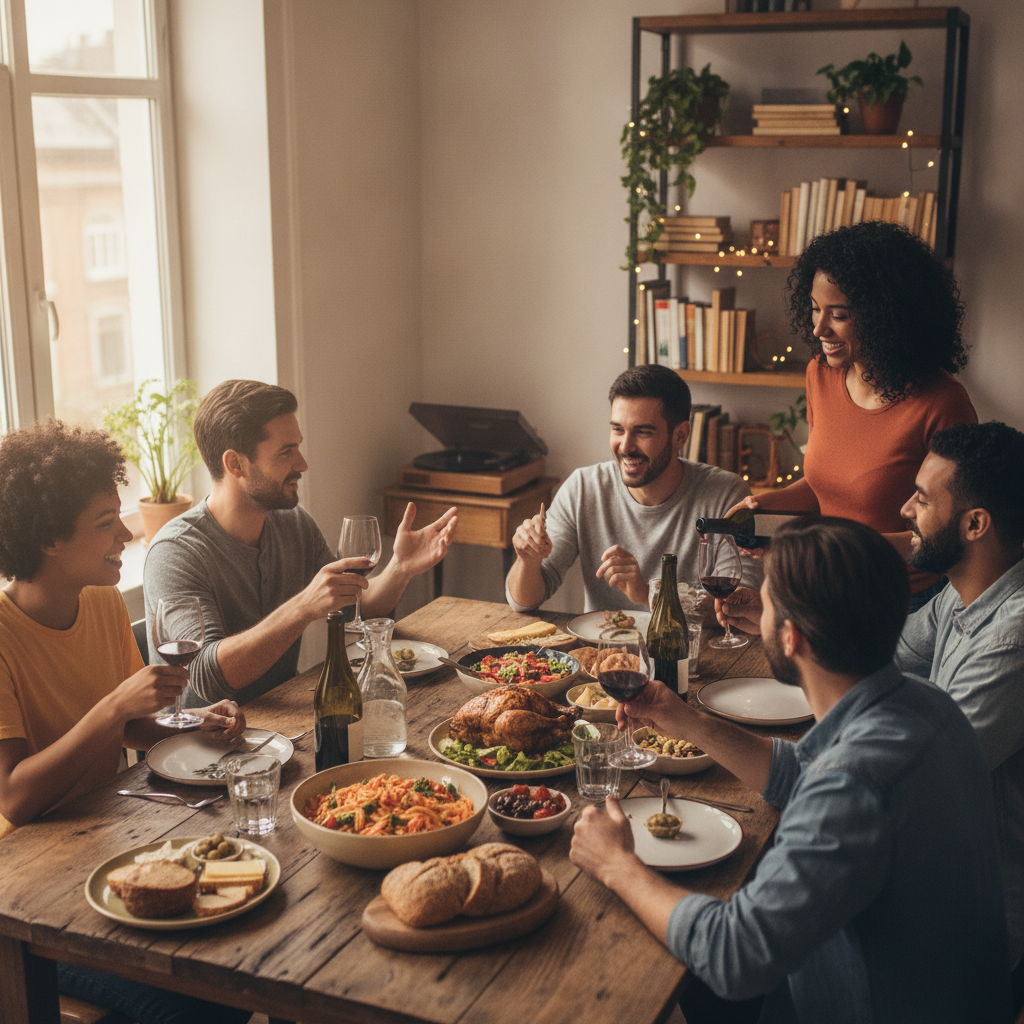
Adult friendships have a quiet fragility to them that nobody warns you about. The older you get, the more you notice how the casual closeness of your twenties — the spontaneous hangouts, the late nights that materialised from nothing — starts to require deliberate effort. People move, schedules thicken with responsibility, and the group chat that once buzzed with plans gradually becomes a place where good intentions expire.
A rotating monthly dinner tradition fixes this in a way that informal plans simply cannot. It's not a complicated system, but the structure it creates is surprisingly powerful. When a small group of four to eight people commits to hosting dinner on a rotating basis — same rough weekend, different home each month — the friendship stops depending on anyone's motivation in any given week. The calendar does the work.
How Does Rotation Change Who Shows Up?
The single biggest reason informal plans collapse is that they require one person to initiate, every time. If that person has a bad month, the plans evaporate. Rotation distributes the load evenly so no single friend carries the weight of keeping the group alive. When it's your turn to host, you host — and that shared responsibility subtly strengthens everyone's sense of ownership over the friendship. Groups that use this model tend to sustain consistent attendance far better than those relying on whoever has the most social energy at any given moment.
Why Does a Small Group Work Better Than a Large One?
Keeping the group between four and eight people is one of the less obvious decisions that makes the tradition sustainable. Smaller numbers mean hosting isn't financially or logistically intimidating, conversations stay cohesive rather than fracturing into side discussions, and scheduling conflicts are easier to absorb. Apps like Doodle or a shared Google Calendar can handle the coordination without anyone needing to chase replies across multiple platforms. When you cap the group size intentionally, every seat at the table carries more weight, and people feel genuinely missed when life gets in the way.
What Should the Hosting Rules Actually Look Like?
The most resilient versions of this tradition keep the hosting rules loose enough that no one feels pressure to perform. The host decides the food — takeout, a slow-cooked one-pot meal, a backyard grill session — without any expectation of elaborate cooking. Groups in cities like Austin, Portland, or Chicago often anchor early dinners around a single seasonal dish and let the rest of the evening unfold naturally. Setting a rough time window, say six to ten in the evening, gives the night shape without rigidity. The point is togetherness, not a curated dining experience.
How Do You Handle the Months When Life Intervenes?
Consistency matters more than perfection. If someone can't host their assigned month, the simplest fix is a quiet swap rather than cancelling the dinner altogether. One person moves their slot forward, another shifts back, and the rhythm continues. Groups that treat a missed month as a disruption rather than a failure tend to give up faster than those who treat it as a normal feature of adult life. The tradition's value comes from its long arc — six months in, it starts to feel like something real; two years in, it becomes part of how the group defines itself.
Why Does the Rotating Format Encourage Better Conversation?
Different homes create different atmospheres, and that variety keeps the dinners from feeling repetitive. Someone with a cramped apartment creates intimacy by default; someone with a backyard spreads the group across warm outdoor air. The physical environment shifts, but the faces stay the same — and that combination turns out to be surprisingly good for conversation. There's also something about being a guest in a friend's space that encourages people to pay closer attention. You notice the books on the shelf, the art on the wall, the music playing low. Those details open doors that a restaurant booth rarely does.
How Can You Keep the Tradition From Going Stale Over Time?
Even well-loved traditions need small refreshes to stay alive. Some groups introduce a loose theme every few months — a regional cuisine, a season-specific menu, a potluck format where everyone brings one dish tied to a memory. Platforms like Canva make it easy to design a simple shared card or invite that makes the next dinner feel like a small event rather than an administrative reminder. The goal isn't novelty for its own sake, but just enough variation to keep people looking forward to it rather than treating it as an obligation.
What Does This Tradition Actually Do for Your Wellbeing?
Regular, low-pressure social contact with a consistent group has a measurable effect on how grounded people feel in their day-to-day lives. A monthly dinner gives you something on the horizon that isn't work-related, goal-oriented, or screen-mediated. It's just people, food, and time — and that combination, repeated consistently, becomes a kind of emotional infrastructure. The friendships deepen not through dramatic shared experiences but through the accumulated weight of ordinary evenings. By the time the group has been at it for a year, those dinners have become a form of continuity that most people didn't even know they were missing.
How Do You Get the Group Started Without Overcomplicating It?
The first dinner is the hardest because it requires someone to say, clearly, "I want to do this, and I'm hosting first." Send a message to four or five people you genuinely want to stay close to, pick a date three to four weeks out, and make it happen. Don't wait for the perfect configuration of people or the ideal moment. Groups that launch with a simple meal and a handshake agreement about rotating tend to outlast those that spend weeks debating the rules before anyone has actually eaten together.
The tradition you're looking for doesn't need an app, a budget, or a formal commitment. It needs a table, a handful of people who matter to you, and the small discipline of showing up — month after month, in each other's homes — until the habit becomes something none of you would think to give up.