Public holiday calendars are one of the most overlooked planning tools in travel, and ignoring them is one of the most reliably expensive mistakes a traveler can make. When a destination's schools close, offices shut, and domestic tourists flood popular sites, accommodation prices spike, transport fills up, and the experience you imagined often bears little resemblance to what you actually get. A few minutes of calendar research before you book can save a meaningful amount on lodging and fundamentally change the quality of your trip.
Check Both National and Regional Holidays
Most travelers think to avoid major national holidays, but regional and state-level holidays cause just as much disruption at ground level. In Spain, for instance, each autonomous community observes its own public holidays on top of national ones, meaning Barcelona and Seville can have completely different surge periods in the same month. Japan's Golden Week — a cluster of national holidays at the end of April and early May — transforms even mid-sized domestic destinations into chaotic, fully-booked corridors. Searching for both national and local holiday schedules gives you a complete picture rather than a partial one.
Use Google Calendar's Public Holiday Layer as a Starting Point
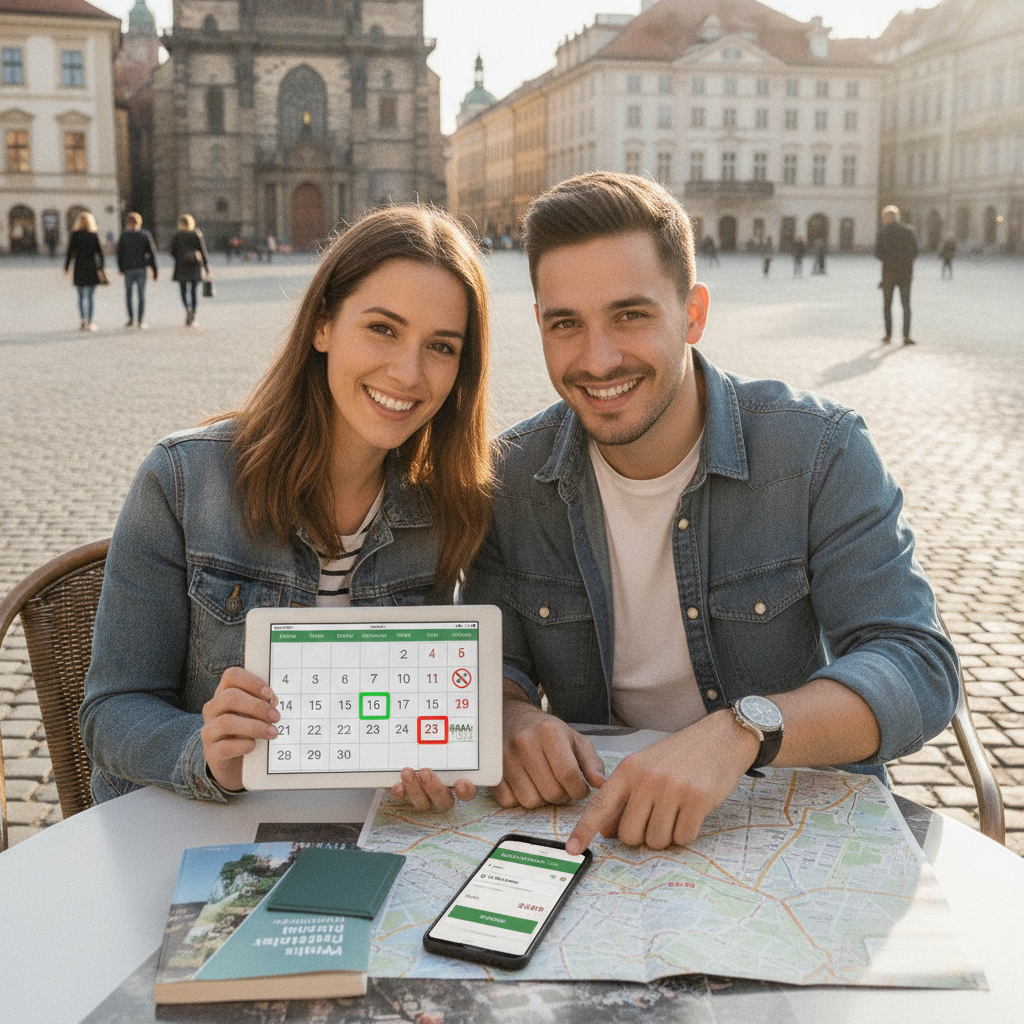
Google Calendar has a built-in feature that lets you overlay the public holiday schedule for any country. It's not exhaustive, but it gets you oriented quickly. Once you've identified potential conflict dates, cross-reference with a destination-specific source — a country's official tourism board website or a local government portal will list everything, including observances that affect business hours, transport, and museum access. Spending ten minutes on this step before locking in your dates gives you enough information to shift a booking window by a day or two and land on a meaningfully quieter, cheaper stretch.
Identify the Shoulder Window Just After a Holiday
One of the most underused pricing gaps in travel is the two-to-three-day window that follows a major public holiday. Domestic tourists return home, hotels reset their pricing algorithms, and the streets clear quickly. If your schedule has any flexibility, arriving two days after a local holiday ends rather than during it can cut accommodation costs noticeably while still leaving you in a destination that feels alive rather than completely empty. Cities like Lisbon and Kyoto, which attract intense local tourism during national holidays, often revert to their quieter, more affordable rhythms within 48 hours of the holiday concluding.
Watch for Holiday-Adjacent Long Weekends
Many public holidays fall near a Monday or Friday, which turns them into long weekends that multiply their crowd effect far beyond a single day. When a holiday lands on a Thursday, for example, many domestic travelers take the Friday off and extend to a four-day break. This pattern is common in France, Italy, and across Latin America. Booking platforms like Booking.com and Airbnb won't flag this for you — their price calendars show cost but don't explain the reason behind it. Knowing the cause lets you make a deliberate choice about whether to avoid the window entirely or price it into your expectations.
Cross-Reference School Holiday Calendars Separately
Public holidays and school holidays are not the same thing, and conflating them is a common planning error. School holiday periods — particularly summer breaks and winter recesses — drive family travel surges that affect beach destinations, theme parks, and any city with significant domestic family tourism. A destination might have no public holidays on a given week but still be packed because local school holidays have begun. Checking the school calendar for your destination country, which is usually available through the national education ministry's website, rounds out the picture that public holiday research alone misses.
Factor in Religious Observances Beyond Official Holidays
Some of the most significant crowd and pricing events in popular destinations aren't official public holidays at all. Semana Santa in Seville, Diwali celebrations in parts of India, and Songkran in Thailand all drive massive domestic and international visitor surges without necessarily appearing on a standard government holiday list. These observances can affect everything from hotel availability to which restaurants and sites are actually open. Travel forums and destination-specific blogs tend to cover these dates thoroughly, and it's worth a quick search to see whether any major religious or cultural event overlaps with your intended dates.
Build a Simple Conflict Check Into Your Booking Routine
The practical move is to make holiday calendar research a fixed step in your booking process — not an afterthought. Before you finalize any international trip, open a tab with the destination's official tourism website, check for public and school holidays within two weeks either side of your dates, and note any regional observances. If you find a conflict, use a flight comparison tool like Google Flights to test whether shifting by three to five days changes your accommodation costs significantly. In many cases it does, and the adjustment takes less time than the research itself.
As dynamic pricing becomes more sophisticated across accommodation platforms, the gap between peak-holiday and off-peak rates is likely to widen rather than narrow. Algorithms are increasingly sensitive to local demand signals, which means public holiday periods will command even steeper premiums than they do now. Travelers who treat holiday calendar research as a standard pre-booking step will consistently find more breathing room in their budgets and more comfortable experiences on the ground. The information is free and publicly available — the only variable is whether you look for it before or after you've already committed.