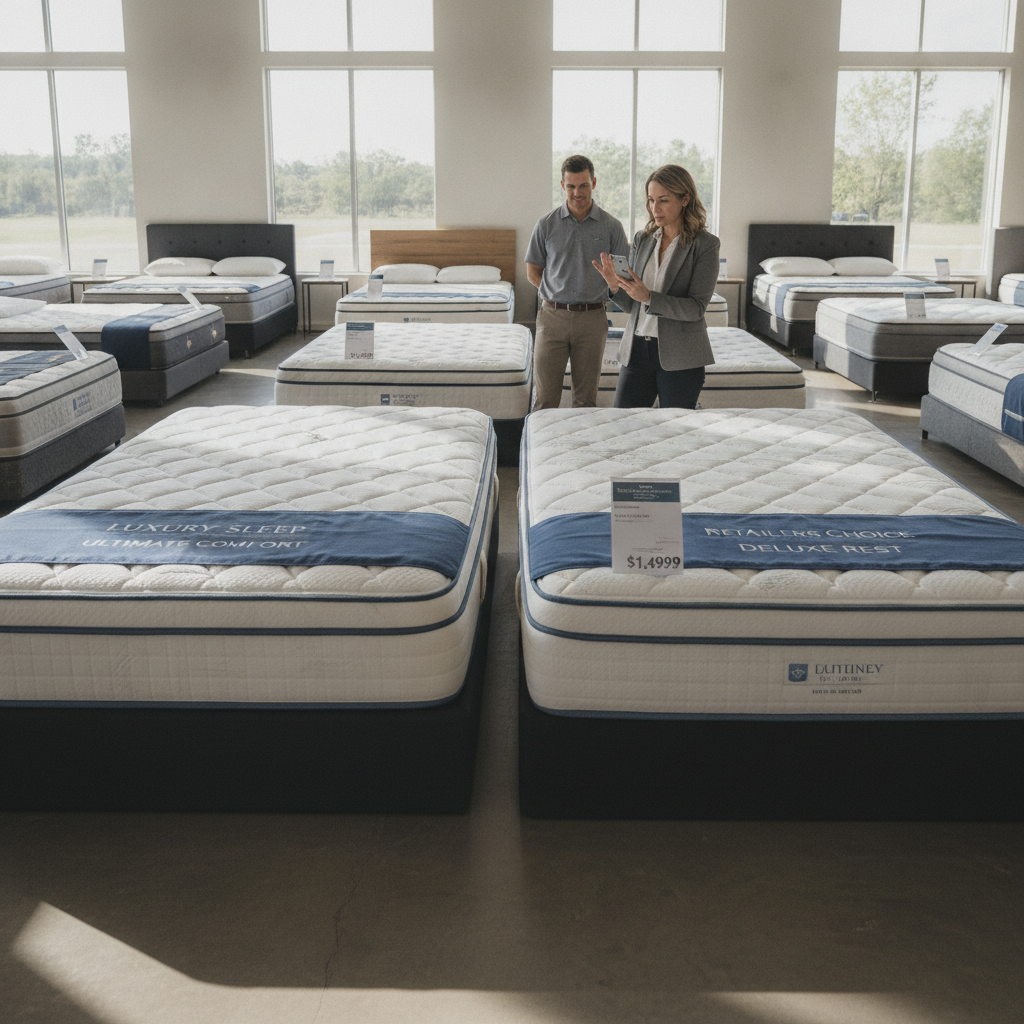
Mattress shopping is one of the few retail experiences where identical or near-identical products regularly carry different names, different price tags, and entirely different marketing stories depending on which store sells them. This isn't an accident — it's a deliberate strategy used by major manufacturers and retailers to control price comparisons and protect profit margins. Understanding how this system works gives shoppers a significant advantage before they ever set foot in a showroom or click through to a product page.
The Mechanics of Exclusive Model Naming
Mattress manufacturers frequently produce the same core product under different model names for different retail partners. A bed sold at Mattress Firm under one name might share the same internal construction, materials, and comfort layers as a model sold directly by the manufacturer's website or through a competing chain — just with a distinct label attached. Brands like Sealy, Serta, and Tempur-Pedic have long used this approach. The result is that shoppers comparing prices across stores often can't find an exact match, which makes apples-to-apples comparisons nearly impossible without some investigative effort.
Why Retailers Actively Encourage This Confusion
Retail chains benefit enormously from exclusive naming because it eliminates price-match pressure. When a customer walks in with a competitor's ad, the salesperson can honestly say the models are different — even if the underlying product is essentially the same. This gives floor staff a defensible reason to hold firm on pricing. The confusion also makes online research less effective, since searching for a specific model name often returns results only from that retailer's ecosystem. Shoppers who don't know to look for internal model codes or construction specs end up anchored to whatever price is presented first.
Reading Internal Construction Details as a Matching Tool
The most reliable way to cut through model-name confusion is to focus on construction specs rather than brand labels. Coil count, foam density, comfort layer thickness, and cover material are harder to obscure than a product name. Many mattress manufacturers publish these details in fine print or in downloadable spec sheets, and comparison sites like Sleepopolis aggregate this data across retailers. When two models from the same brand share identical specs, the likelihood that they're the same or nearly identical product is high — and any price gap between them is worth questioning before committing to the higher-priced option.
The Role of Direct-to-Consumer Brands in Setting a Baseline
The rise of direct-to-consumer mattress brands like Saatva and Purple has created a useful reference point for price-conscious shoppers. Because these brands don't sell through third-party retail channels, their pricing isn't fragmented across exclusive model names. A shopper who understands the construction specs of a mid-range DTC mattress can use that knowledge as a calibration tool — comparing what a bed at that price point actually contains versus what a similarly priced retailer-exclusive model offers. This framing shifts the conversation from brand loyalty to material value, which tends to favor the informed buyer.
How to Use Model Codes and SKUs Strategically
When you examine a mattress in a showroom, the tag typically displays a model name but not the underlying manufacturer SKU or model code. Asking a salesperson directly for the SKU — or checking the underside of the mattress tag — can reveal the product identifier that links back to manufacturer documentation. Entering that code into a search engine often surfaces reviews, spec comparisons, and sometimes even the same product sold under a different name elsewhere. This approach works particularly well with major brands and takes only a few minutes but can surface meaningful price differences across retail channels.
Timing Purchases Around Retail Clearance and Refresh Cycles
Mattress model lines are refreshed regularly, typically aligned with major holiday sales windows and the introduction of new retail-exclusive naming agreements. When a manufacturer updates its lineup, older exclusive models often get discounted or discontinued, creating a window where the same construction quality is available at a reduced price simply because a new name has taken its place on the showroom floor. Signing up for email alerts from retailers like Costco or tracking floor-sample sales at regional bedding chains can surface these clearance moments. Patience is a genuine asset in this category — waiting for a model transition cycle rather than buying at launch can represent a meaningful saving on an otherwise identical product.
The mattress industry is unlikely to abandon exclusive model naming anytime soon, but the tools available to shoppers are improving steadily. Aggregator review sites are becoming more sophisticated at cross-referencing construction details, and manufacturer transparency is gradually increasing in response to consumer pressure. As more shoppers learn to look past the label and focus on what a mattress is actually made of, the leverage retailers hold through naming confusion will continue to erode. The gap between what a well-informed buyer pays and what an uninformed one pays may narrow over time — but for now, that gap remains real, and knowing how to close it is a skill worth developing before any significant mattress purchase.