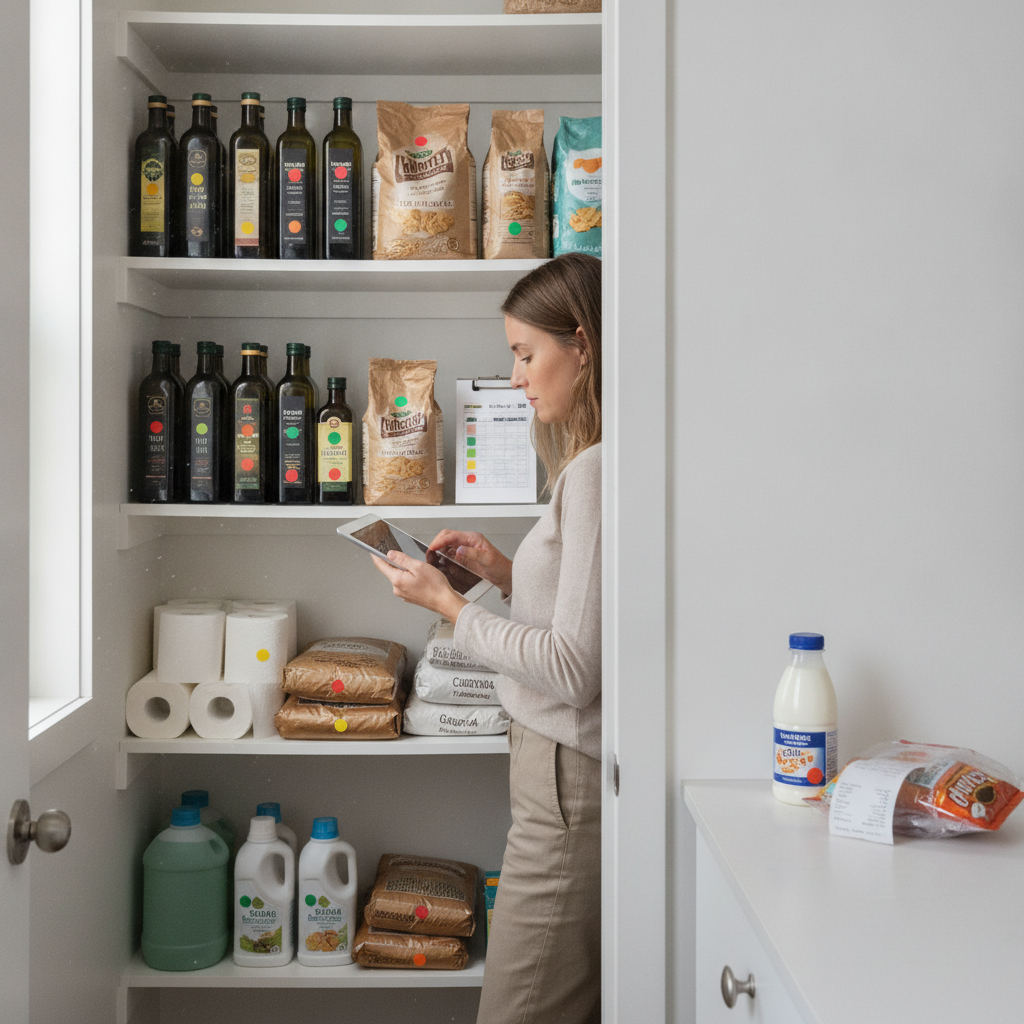
Running out of dish soap on a Sunday evening or realizing you're down to your last roll of toilet paper mid-week is one of those small household failures that costs more than it should. The fix — a quick trip to a nearby convenience store or a rushed same-day delivery order — feels minor in the moment, but it carries a price premium that quietly compounds over time. Building a simple reorder system around your consumables removes that premium almost entirely, without requiring much effort to maintain.
Map Out Every Consumable in Your Home First
Before you can set any kind of threshold, you need a clear inventory of what your household actually runs through on a recurring basis. Walk through every room — kitchen, bathroom, laundry area, cleaning supplies cupboard — and list every item that gets used up and replaced. This includes things like paper towels, shampoo, batteries, garbage bags, and dish soap. Many households are surprised to find they have twenty or more distinct consumable categories once they write them all down. Apps like Pantry Check or Out of Milk can help you build and maintain this list digitally.
Assign a Reorder Point Based on Lead Time, Not Gut Feel
The reorder threshold is the quantity at which you place a new order — not the quantity at which you run out. For most household consumables, setting that threshold at roughly a two-week supply works well. If you typically use one bottle of laundry detergent per month, your reorder point should trigger when you open your last bottle, not when it's empty. This lead time buffer accounts for delivery windows, sale cycles, and the simple reality that life gets busy. Without a defined threshold, the default reorder point becomes zero — which is exactly when convenience stores profit.
Group Your Consumables Into Buying Families
Not every consumable needs to be ordered on its own schedule. Grouping related items into buying families reduces the number of individual reorder decisions you make and makes bulk purchasing easier to manage. For example, all paper products can be evaluated together, as can cleaning concentrates, personal care items, and pantry staples. When one item in a family hits its reorder threshold, you review the rest of the group at the same time. This batching strategy reduces shipping costs, consolidates delivery windows, and makes it easier to take advantage of multi-item promotions at retailers like Costco or Amazon.
Build Your Baseline From Three Months of Usage Data
Setting accurate thresholds requires knowing your actual consumption rate, not guessing at it. Spend one quarter tracking how often you replace each consumable — note the date you open a new unit and the date you open the next one. After three months, you'll have a reliable average consumption rate for each item. This matters because households vary significantly: a two-person apartment might go through a bottle of hand soap every three weeks, while a family of four might go through the same bottle in ten days. Your thresholds should reflect your household, not a general estimate.
Use Subscribe-and-Save Programs Only for Predictable Items
Automatic subscription programs from Amazon, Grove Collaborative, or Target offer real discounts on household consumables — typically five to fifteen percent off the standard price — but they only deliver value when the delivery cadence matches your actual usage. The risk of subscription programs is that they can create oversupply on slower-moving items, which ties up money and storage space. Reserve subscriptions for the items with the most consistent consumption rates: toilet paper, paper towels, and basic cleaning products tend to qualify. For items with variable usage, manual reorder using your threshold list works better.
Track the True Cost of Convenience Store Purchases
For one month, keep a note of every household consumable you buy from a convenience store, gas station, or express delivery service. Write down the item, the quantity, and the price. Then look up the equivalent item at a standard grocery store or warehouse retailer. The markup at convenience outlets on everyday consumables is substantial — sometimes two to three times the comparable supermarket price. Seeing the gap on paper makes the abstract concept of a convenience premium concrete, which tends to be the most effective motivator for maintaining your reorder system consistently.
Set a Weekly Five-Minute Inventory Check
The system only functions if you check it regularly. A five-minute walk-through of your consumable categories once a week — Sunday evenings tend to work well for most households — is enough to catch anything approaching its reorder threshold before it becomes urgent. You can do this visually for most items without counting units precisely. The goal is to identify anything you'll need within the next two weeks so you can add it to a scheduled order rather than a reactive one. Over time, this habit becomes automatic and takes less than the five minutes you've allocated.
Separate Your Emergency Stock From Your Active Supply
One practical refinement is keeping a small, separate emergency stock for the highest-impact consumables — the items whose absence causes genuine disruption, like toilet paper, pain relievers, or garbage bags. Store this backup supply in a dedicated spot and treat it as untouchable unless your primary stock runs out completely. When you break into the emergency stock, that's your signal to reorder immediately. This two-tier approach provides a safety net for the moments when your weekly check gets missed without encouraging the convenience store habit you're working to break.
The broader shift that this kind of system produces is a move from reactive purchasing to planned purchasing — and planned purchasing is almost always cheaper. As more retailers build predictive reorder tools into their apps and loyalty programs, the infrastructure for household consumable management is getting easier to use. The households that set up even a basic version of this system now are well-positioned to take advantage of those tools as they mature, while continuing to avoid the small but persistent premium that last-minute convenience purchases quietly extract from the weekly budget.