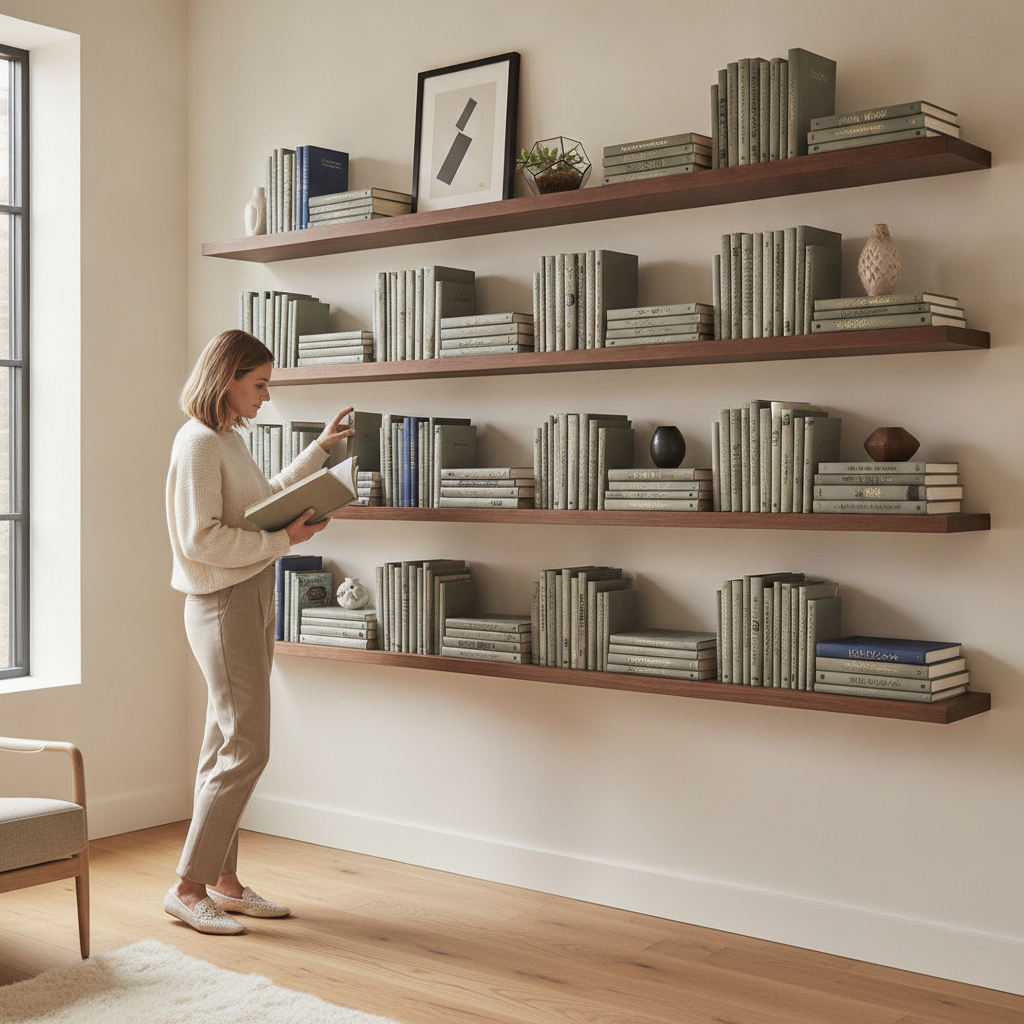
Books accumulate with a particular kind of quiet persistence, arriving as gifts, impulse purchases, conference freebies, and secondhand finds until the shelves reflect not a mind but a tide. The distinction between a collection and an accumulation is not merely aesthetic — it is philosophical, and it shapes every subsequent decision a reader makes about what enters the home and what earns the right to stay.
The Collector's Mindset vs. the Gatherer's Habit
A gatherer acquires books the way most people acquire kitchen gadgets: opportunistically, emotionally, without a governing framework. A collector, by contrast, operates with something closer to *Wabi-sabi* — the Japanese concept of finding beauty in intentionality and imperfection — applying a quiet discernment to each addition. This shift in mindset doesn't mean reading less or enjoying books with less spontaneity. It means knowing, at least loosely, what the collection is *for*. Is it a working reference library? A record of a reading life? A curated aesthetic environment in the vein of Shakespeare and Company in Paris, where every spine tells part of a coherent story? Once that question has been answered honestly, the act of browsing a bookshop changes entirely. A title that once would have been an automatic purchase — interesting enough, vaguely relevant — gets held in the hand differently. The collector asks whether it belongs. The gatherer only asks whether they want it.
What Enters the Shelf More Slowly
When a home library is treated as a curated space rather than a storage problem, acquisition slows in ways that are immediately noticeable and ultimately freeing. Impulse purchases at airport bookshops, the kind driven by boredom and proximity rather than genuine interest, become far less common. So do the well-intentioned gifts that arrive unrequested — books someone else thought you should read, which accumulate in a guilt-laden corner of the shelf for years. A useful concept here is *tsundoku*, a Japanese term describing the habit of buying books and letting them pile up unread. Tsundoku, in a curated library, is not eliminated entirely — a degree of aspirational purchasing is part of any reading life — but it becomes conscious rather than reflexive. Platforms like Goodreads serve a practical function in this context, functioning as a holding pen for desire: the book gets added to a want-to-read list rather than purchased immediately, and if the interest survives three months, it probably deserves shelf space.
The Harder Question of What Leaves
Deaccessioning — the formal museum term for removing items from a permanent collection — is where the philosophy becomes genuinely demanding. Most readers find it far easier to acquire than to release, partly because books carry emotional residue that objects rarely do. A novel read during a difficult year, a guidebook from a formative trip, a text that shaped a particular intellectual period — these carry weight beyond their physical mass. The curated approach doesn't demand ruthlessness. What it does demand is honesty about the difference between sentiment and utility, and between a book that is genuinely part of who you are and one that simply represents who you hoped you might become. The latter category — the aspirational unread, the books bought as identity signals rather than genuine interests — is where most unnecessary accumulation hides. Powell's Books in Portland and similar independent shops with strong used-book buying programs offer a practical off-ramp: the book leaves, funds another more intentional purchase, and the shelf breathes.
How the Library Reflects the Reader Over Time
A curated collection becomes, over years, an unusually accurate self-portrait. Unlike social media feeds or professional bios, a thoughtfully maintained home library doesn't perform — it simply records. The subjects that cluster, the authors that appear in multiples, the gaps that reveal blind spots — these tell a story that the reader may not have consciously authored but unmistakably owns. Interior designers and booksellers who work with private clients frequently note that the moment a homeowner stops treating books as decor and starts treating them as a living archive, the room changes character. The difference is palpable, even to visitors who couldn't name a single title on the shelves. There is a coherence — what Italians might call *sprezzatura*, a studied effortlessness — that a genuinely curated library projects, distinct from the impression created by books arranged by colour or bulk-bought for visual effect.
Buying Differently When the Standard Is Higher
Perhaps the most practical consequence of the curated approach is a shift in where and how books are purchased. When every addition requires justification against a coherent whole, the cheap and convenient options lose some of their appeal. A quickly ordered paperback chosen from an algorithm-driven recommendation carries less weight than a title found after real browsing — through a neighbourhood bookshop, a library's new acquisitions shelf, or a trusted friend's recommendation. The cost-per-read calculation changes too. A reader who buys fewer books but reads each one more deliberately, and keeps only those worth returning to, typically spends less annually than one who buys freely and finishes perhaps a third of what arrives. The library becomes a resource rather than a backlog, and the act of choosing what to read next — from a shelf of books that are all genuinely there for a reason — carries a quiet satisfaction that no algorithm replicates.
Returning to the Idea That Started It All
Books accumulate with a quiet persistence, and left unexamined, that persistence becomes the default architecture of a reading life. But the moment a person decides that their shelves should reflect a point of view rather than simply a history of purchases, the whole system shifts — what enters more slowly, what leaves with less guilt, and what stays earns its place rather than simply occupying it. That shift, small as it sounds, changes not just the room but the relationship with reading itself.