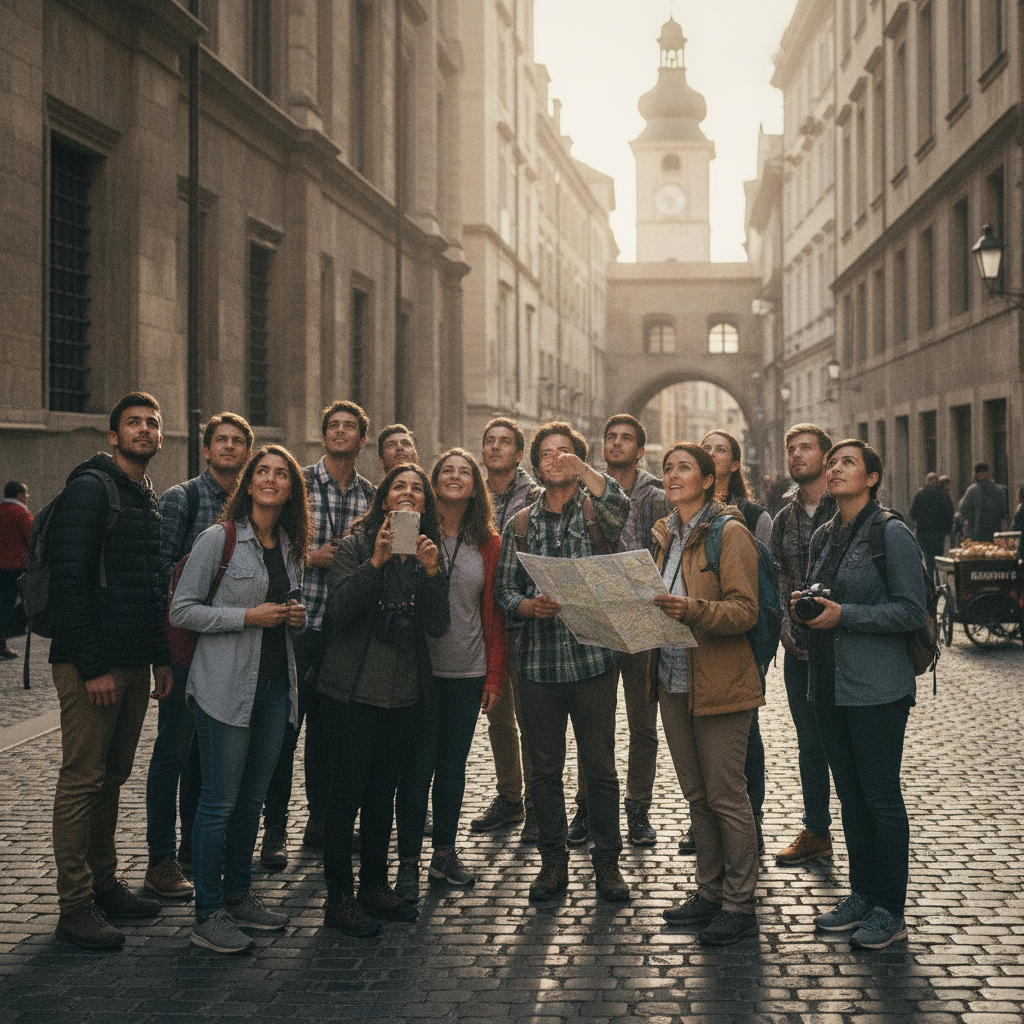
There is a particular kind of disorientation that settles over a traveler on the first morning in an unfamiliar city — a feeling that is neither unpleasant nor entirely comfortable. The streets have no emotional weight yet. The neighborhoods are just names. The mental map assembled from hours of browser tabs, saved Instagram locations, and downloaded PDF guides dissolves the moment the hotel door closes behind you and the actual city begins. This is not a failure of preparation. It is simply what cities do to newcomers, and no amount of research fully inoculates against it.
The Limits of Pre-Trip Research
Pre-trip research is genuinely useful, but it operates in a register that is fundamentally different from physical experience. Reading about Trastevere in Rome or the Marais district in Paris produces a kind of abstract familiarity — an awareness of names, distances on a map, the reputation of a particular street market. What it cannot produce is a sense of how those places feel to move through, how the light falls differently on the eastern side of a block, or why locals cut through a particular alley rather than taking the main road. The gap between knowing about a place and knowing how to inhabit it is wider than most travelers anticipate, and it is precisely this gap that a well-designed walking tour closes with unusual efficiency.
The act of following a knowledgeable guide through a city's streets compresses what might otherwise take days of wandering into a single two-hour orientation. A good guide — the kind found through established operators like Context Travel, Walks of Italy, or the free Sandemans New Europe tours operating in dozens of cities — does not simply recite historical dates. They provide the cognitive scaffolding that makes everything else stick: why this square matters more than the grander one three blocks away, which café has been serving the same family's recipe for four generations, what the neighborhood looked like before a particular wave of development changed its character. These are not facts easily surfaced through a Google search. They are the kind of contextual knowledge that only accumulates through sustained local presence.
How Embodied Knowledge Changes Everything
There is a concept in anthropology called *embodied cognition* — the idea that understanding is not purely mental but is shaped by the physical experience of moving through space. Travelers encounter this principle without needing the terminology every time they realize, after walking a route once, that the map they studied for twenty minutes suddenly makes intuitive sense. A walking tour accelerates this process by providing a guided first traversal of the city's logic. After two hours of purposeful movement through streets, markets, and public squares, the traveler has not merely seen more; they have begun to feel the city's rhythm and internal geography in a way that reorganizes everything else they know about it.
This reorientation has practical consequences beyond the purely experiential. A traveler who understands, viscerally, that the old city sits uphill from the commercial district, or that the river bends in a way that makes certain neighborhoods feel closer than they appear on a flat map, makes better decisions for the rest of the trip. They stop second-guessing transit choices. They know which neighborhoods to avoid after dark not because a guidebook said so, but because a local explained the economic history that shaped them. The tour, in other words, functions as a key that unlocks the remaining days of the trip.
The Social Architecture of a Walking Tour
Beyond spatial orientation, a guided morning tour provides something that solo research never can: live human interaction with someone who has an investment in your understanding. The best guides — particularly those working for smaller, boutique operators in cities like Lisbon, Oaxaca, or Kyoto — field questions in real time, adjust their explanations based on what the group finds confusing or fascinating, and offer recommendations that reflect current local knowledge rather than the slightly dated intelligence of a published travel guide. They know which restaurant opened last month and which landmark is closed for renovation until autumn.
There is also a social dimension to the group format that carries its own unexpected benefit. Fellow travelers on a walking tour share a specific orientation to the city — they are all newcomers, all in the same early stage of arrival — which creates a temporary community of mutual curiosity. Conversations struck up between stops sometimes translate into dinner companions, collaborative day-trip partners, or simply the reassurance of knowing that confusion about a place is shared and therefore normal. This is a kind of social infrastructure that no pre-trip research can build.
Making the Most of Your First Morning
If you book a guided walking tour for your first morning, treat what comes after the tour with the same intentionality. Spend the early afternoon revisiting one or two of the places your guide mentioned in passing — the ones that piqued your curiosity but weren't part of the official route. Return to the square or the market or the viewpoint without the structure of the group, and notice how differently you experience it now that you have context. The *flâneur* tradition in French culture — the idea of the purposeful urban wanderer who moves through a city as both observer and participant — applies here. You are no longer a stranger improvising. You are someone who has been briefly initiated, and that changes everything about how you move and what you notice.
The disorientation of a first morning in an unfamiliar city is not a problem to be solved before departure. It is an experience to be met with the right tool once you arrive — and that tool, more reliably than any combination of apps, guidebooks, or saved posts, is two hours on foot with someone who already knows where everything is and why it matters.