There's a particular kind of frustration that settles in around the third hour of a coastal highway transfer — the same stretch of barrier wall, the same service station stops, the same sense that the journey has become something to endure rather than experience. Coastal regions are, by their very nature, designed to be seen from the water, and yet most travelers default to land routes out of habit, assumption, or simple unfamiliarity with what ferry networks now offer. The good news is that ferry infrastructure along popular coastal destinations has improved considerably, and the case for choosing water over asphalt is stronger than ever.
The Hidden Efficiency of Coastal Ferry Networks
Time and Distance Seen Differently
Ferry routes often cover distances that appear longer on a map but feel dramatically shorter in practice, largely because the experience itself doesn't register as transit in the same draining way that a packed coach or rental car crawl does. Along the Amalfi Coast, for instance, hopping a ferry between Positano and Salerno sidesteps the notoriously narrow cliff roads and deposits you directly at a working harbor rather than a parking lot on the outskirts of town. The efficiency isn't just about speed — it's about the quality of the time spent, which has a real effect on how rested and open you feel when you arrive. Arriving by water, facing the town from the sea, gives you a traveler's orientation that no GPS app can replicate.
Cutting Through the Routing Complexity
Planning ferry segments used to require significant research across scattered local operators, but platforms like Rome2rio and Ferryscanner have simplified cross-referencing dramatically. You can input a coastal origin and destination and see water routes alongside road and rail options, often discovering connections that aren't visible on standard travel booking platforms. This side-by-side comparison frequently reveals that ferry fares are competitive — sometimes cheaper once you factor in fuel, tolls, and parking costs that land transfers accumulate quietly. Checking these platforms early in the trip-planning process, rather than as an afterthought, opens up routing possibilities that genuinely reshape the itinerary.
What the View Actually Does for a Trip
Scenery as an Active Ingredient
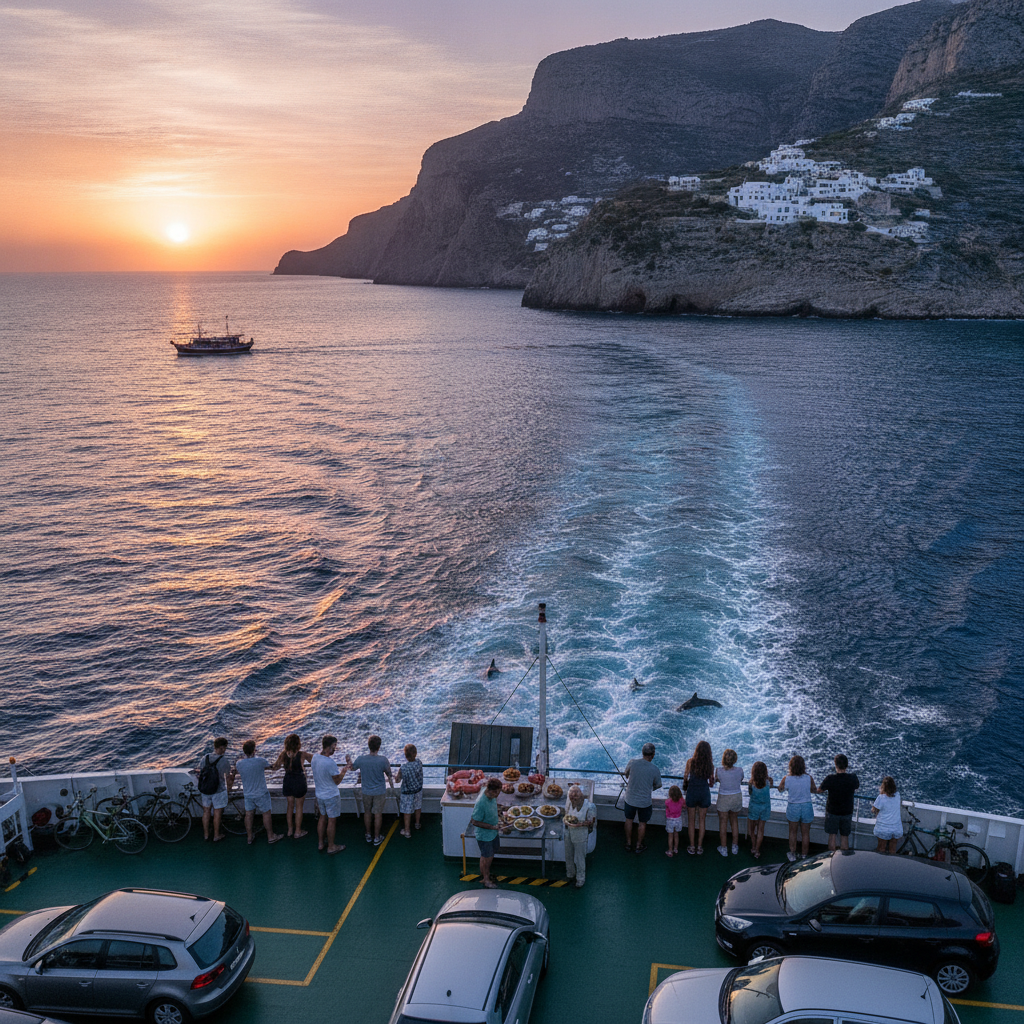
There's a meaningful difference between scenery as backdrop and scenery as experience, and ferry travel tips that balance sharply toward the latter. Crossing the Greek islands on an Aegean ferry — even a utilitarian one making stops at Paros, Naxos, and Ios — means watching the light shift on volcanic cliffs in real time, seeing the silhouette of one island replace another, and feeling the particular rhythm of arrival that only water travel provides. This isn't a luxury reserved for scenic cruises; regular passenger ferries on working routes deliver the same effect at a fraction of the cost. The visual richness of a coastal journey taken by water tends to anchor itself in memory in ways that motorway driving simply doesn't.
The Pacing Difference on the Deck
Ferry travel imposes a useful kind of slowness that benefits the traveler who's been moving too fast. You can't check your phone while also watching the coastline peel away, and most people find they don't want to. The enforced pause — an hour on the water between two ports — functions as a reset between destinations, which is something no land transfer naturally provides. Experienced coastal travelers often describe this quality as one of the most underrated aspects of ferry-based itineraries: the journey segments actively restore rather than deplete, meaning you arrive at each stop genuinely ready for it.
Where Spontaneous Local Life Actually Happens
The Social Architecture of a Ferry Deck
Working ferries are used by local residents, tradespeople, students, and families in a way that tourist-facing transport rarely is. The social texture on a Sardinian ferry running between Palau and La Maddalena is entirely different from what you'd encounter on a private transfer or tourist shuttle — and that difference is where the unexpected conversations, the offhand restaurant recommendations, and the unscripted local insight tend to live. You're not an observer of local life from behind glass; you're briefly a participant in it, sharing a crossing with people who made the same choice for entirely different reasons. These moments are impossible to plan and easy to stumble into when you choose the route that locals actually use.
Ports as Entry Points Rather Than Endpoints
Arriving by ferry tends to deposit you in older, more characterful parts of a town — the original harbor area, the market quarter, the working waterfront — rather than the modern periphery where bus stations and car parks cluster. This geographic advantage means your first impression of a place is already richer, and the walk from the ferry terminal into town passes through layers of the destination that a taxi from the highway would entirely skip. In Croatia's Dalmatian coast, for example, arriving by ferry into Split's Riva promenade places you immediately inside the life of the city in a way that no other arrival method can match.
Planning the Seasonal Timing Smartly
When Routes Run and When They Don't
Ferry schedules along most European and Mediterranean coastal routes operate on a seasonal model, with fuller timetables running from late spring through early autumn and reduced winter services on many routes. Traveling in the shoulder months of May and September typically means you get near-peak frequency with noticeably thinner crowds — both on the ferries themselves and at the ports you're passing through. Apps like Busbud, which covers multimodal transport including ferry connections in some regions, are worth cross-referencing with local operator websites when planning shoulder-season itineraries, as smaller operators don't always list on aggregators. Booking even a day or two ahead for popular island crossings during peak summer is wise, as foot-passenger capacity on smaller ferries fills faster than most travelers expect.
Building Ferry Flexibility Into the Itinerary
The travelers who get the most from coastal ferry networks tend to build a loose framework rather than a fixed schedule — identifying which crossings require advance booking and leaving the shorter, more frequent hops unbooked so they can adjust based on how a day unfolds. This flexibility is one of the structural advantages of ferry travel over land transfers, which tend to lock you into departure points and timing windows. A morning that stretches unexpectedly into a long lunch in a harbor village is far easier to accommodate when your onward crossing leaves every two hours than when a pre-booked transfer is waiting in a car park.
As coastal tourism continues to evolve, ferry networks are attracting genuine investment — both in vessel quality and in digital ticketing infrastructure — making this style of travel increasingly accessible to the planner who's willing to look slightly beyond the default booking path. The routes are there, the platforms to find them are improving, and the experience of arriving somewhere by water remains one of the most rewarding things a coastal itinerary can offer. Starting with even one ferry segment on an upcoming trip is enough to understand why, for many travelers, it quietly becomes the only way they want to move along a coastline.