Grocery stores are designed to make spending feel effortless — and one of the quietest ways that plays out is through package sizing. Most shoppers assume that buying more always means paying less per unit, or that a mid-size option represents a safe, sensible middle ground. Neither assumption holds up reliably once you start checking the math. Understanding how unit pricing actually works — and where the traps are — is one of the most practical skills you can develop for consistent grocery savings.
Understand What Unit Price Actually Tells You
Unit price is the cost per standardized measure — per ounce, per liter, per sheet, per count. Retailers are required to display it on shelf tags in most places, though the labeling is often small and easy to overlook. The number strips away the packaging psychology and gives you a direct comparison between products regardless of how they're sized. Once you start reading unit prices consistently, you stop comparing the sticker price on the front of the box and start comparing what you're actually paying for what you're actually getting.
Recognize the Mid-Size Package Pattern
The mid-size markup is a genuine pricing pattern, not a rare anomaly. Across categories like cereal, pasta, canned goods, laundry detergent, and bottled condiments, the medium-sized package frequently carries a higher unit price than both the small and the large. Brands like Heinz, Kellogg's, and Tide have all shown this pattern at various points across different retail chains. The logic from a manufacturer's perspective is straightforward: mid-size options are positioned as the default choice for shoppers who aren't paying close attention, which creates room to build in margin.
Check the Unit Price on Every Size Available
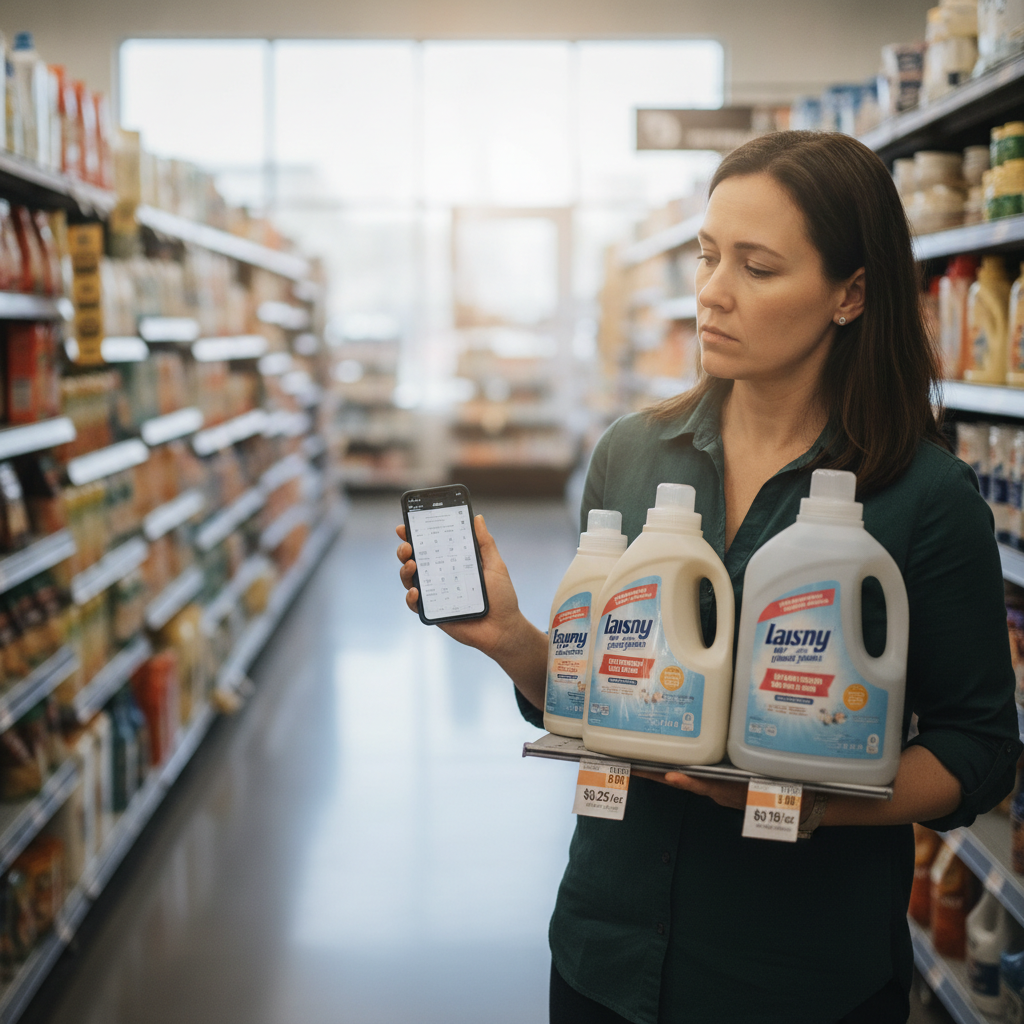
The most reliable habit is comparing unit prices across all available sizes of a product before putting anything in your cart. Don't assume the large is cheapest or the small is most expensive. Pull up the shelf tag numbers for each option and rank them mentally. This takes about fifteen seconds per product and becomes second nature quickly. At a store like Kroger or Whole Foods, where shelf tags typically include unit pricing, this comparison is straightforward. At stores with less consistent labeling, you can use a calculator on your phone or a unit price app to fill in the gaps.
Use Your Phone's Calculator Strategically
When unit price labels are missing, inconsistently formatted, or hard to compare across different units of measurement, your phone's calculator closes the gap. Divide the total price by the total quantity — ounces, count, fluid ounces — and you have your unit price in seconds. The habit is especially useful in bulk or warehouse sections where price tags emphasize total cost rather than per-unit breakdowns. A few extra seconds of math at the shelf is far more valuable than discovering after checkout that the medium-size box you grabbed cost more per serving than the large one sitting next to it.
Factor In Realistic Consumption Before Buying Bulk
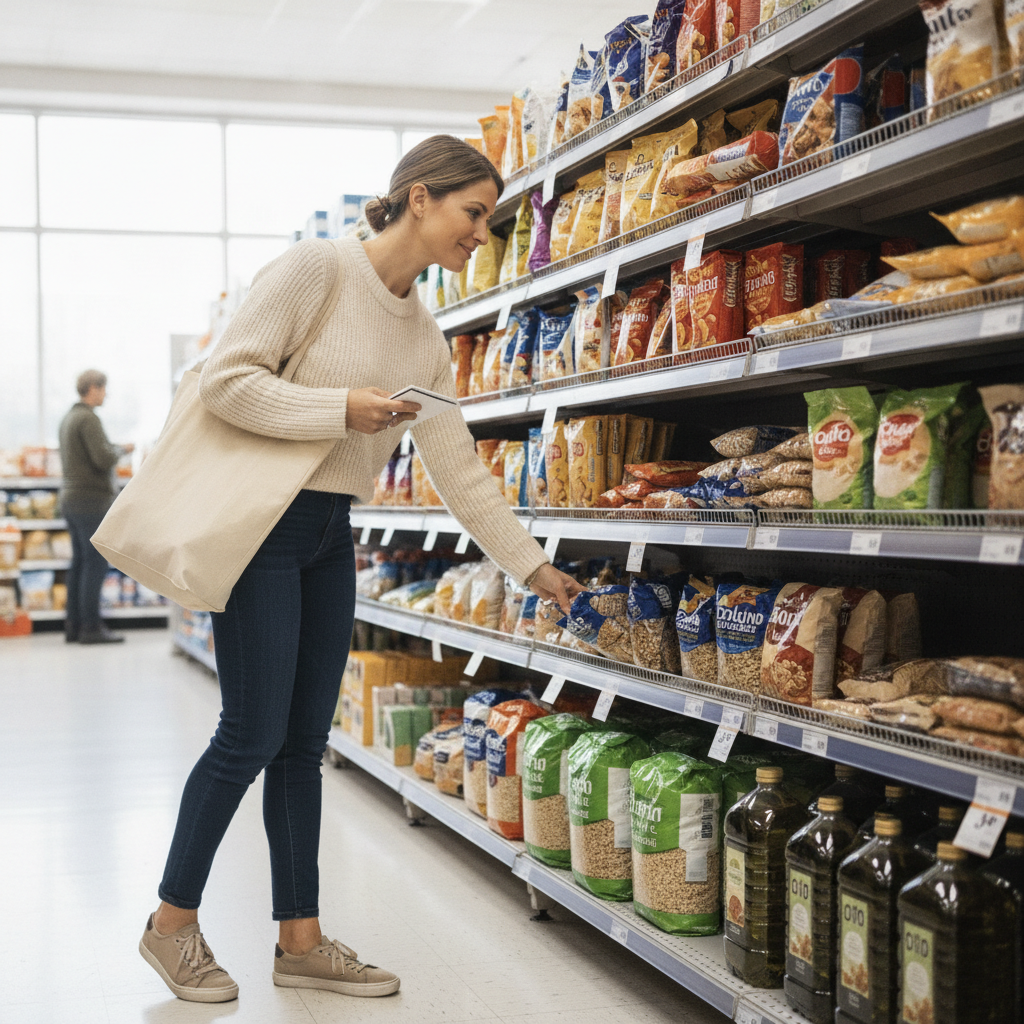
The largest package doesn't always win once you account for actual usage. Perishables, products with short shelf lives, and items your household only uses occasionally can end up wasting money even when their unit price is technically lower. Bulk olive oil is only a good deal if you cook with it regularly enough to use it before it goes rancid. The same applies to bulk snacks, spice jars, and specialty condiments. Buying the mid-size at a slightly higher unit cost can be the smarter choice when the alternative is buying a large size that partially goes to waste.
Pay Attention to Store Brand vs. Name Brand Unit Pricing
Store brands — including Trader Joe's house label, Costco's Kirkland Signature, and most major supermarket private labels — frequently offer meaningfully lower unit prices than name brand equivalents even at comparable package sizes. The mid-size markup trap also applies within store brand lines, so the comparison still matters. Running the unit price check across both brand tiers together gives you the clearest picture. Often, a store brand large size beats a name brand large size by a wider margin than you'd expect, making the upgrade in quantity even more financially sound.
Build a Short Mental List of Your Staples
Not every grocery purchase needs a detailed unit price analysis. Focusing your attention on the items your household buys repeatedly and in meaningful quantities produces the highest return. Staples like cooking oil, rice, canned tomatoes, coffee, dish soap, and breakfast cereal are purchased frequently enough that consistent unit price awareness compounds into real savings over months. Tracking which size and which brand offers the best unit price on your top ten to fifteen staples creates a reliable mental baseline that you can apply without much effort on most shopping trips.
Revisit Your Assumptions When Prices Change
Retail pricing isn't static. Promotional pricing, supply shifts, and reformulations change unit price rankings regularly. A large-size product that offered the best unit price six months ago might no longer hold that position. Stores like Target and Walmart frequently rotate which sizes are on sale, and that rotation affects the unit price hierarchy across the shelf. A quick check at the shelf during each visit — rather than assuming last time's winner still applies — keeps your shopping decisions current. Small updates to your habits on a regular basis are more effective than a single deep audit done once.
Unit pricing is one of the few grocery store tools that works entirely in the shopper's favor — and it costs nothing to use. The mid-size package is a consistent soft spot across product categories, quietly inflating costs for shoppers who rely on intuition rather than numbers. By building a consistent habit of checking unit prices across all available sizes, factoring in real usage patterns, and revisiting your assumptions when store conditions change, you position yourself to make genuinely informed decisions rather than packaging-influenced ones. The savings are steady, accumulative, and entirely within reach on every shopping trip.