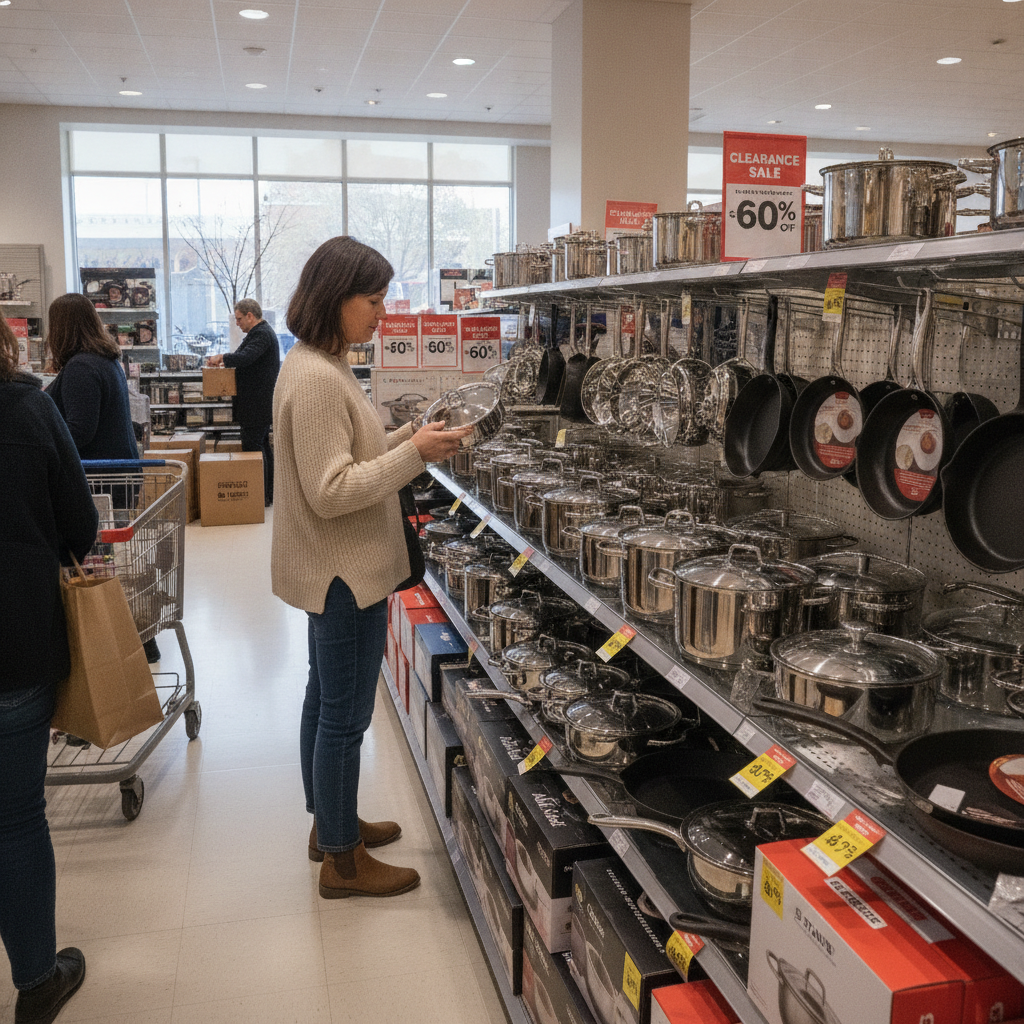
The weeks before Christmas are filled with good intentions. Cookware sets gleam under department store lighting, gift guides push stainless steel collections to the top of every wish list, and the pressure to buy now — before it sells out — feels entirely real. But shoppers who pause, resist that urgency, and wait just a few weeks find themselves in an entirely different market: quieter, better stocked, and considerably cheaper.
The post-holiday January sales represent one of the most underused windows in the retail calendar for kitchen purchases. Understanding why that window exists — and how to use it strategically — can make a genuine difference to what you spend and what you walk away with.
How Does Pre-Christmas Demand Inflate Cookware Prices?
Retailers know that cookware sells exceptionally well as a gift category in November and December. That predictable demand gives them little reason to discount. Brands like Le Creuset, All-Clad, and Zwilling hold pricing firm through the holiday season precisely because the audience is motivated and the timeline is short. When you're shopping for a gift with a specific deadline, price comparison takes a back seat to availability.
The result is that pre-Christmas cookware sits at or very near full retail price, with promotional discounts rarely exceeding token amounts. A cast iron Dutch oven that retails for a premium price in December often carries the same sticker in November. The urgency is manufactured by the season, not by any real scarcity.
What Changes About the Market Once January Arrives?
Once the holiday period closes, the retail equation shifts completely. Stores are left with inventory that didn't sell as gifts, returned items that are perfectly functional, and warehouse stock that needs to move before spring lines arrive. The motivation to discount becomes genuine rather than performative.
This is when you start seeing meaningful reductions — not the 10-15% that passes for a holiday deal, but the kind of price drop that makes a quality cookware set genuinely accessible. Department stores like Macy's and major online platforms including Amazon run dedicated January clearance events that target exactly this category. The stock that felt scarce in December reappears in quantity, often across a wider range of sizes and colorways than were available at peak season.
How Does Selection Actually Improve After the Holidays?
One of the more counterintuitive aspects of January cookware shopping is that selection tends to be broader, not narrower. Pre-Christmas, retailers stock the safest gift configurations — the most popular sizes, the most neutral colors, the mid-tier sets that photograph well in gift guides. Unusual sizes, premium finishes, and specialist pieces are stocked conservatively because they're harder to move as gifts.
After the holiday rush, returned merchandise re-enters inventory alongside unsold stock, and retailers supplement both with fresh clearance lines. You're more likely to find a 7-quart braiser, a full knife block, or a specific induction-compatible skillet in January than you were in December. Using a price-tracking tool like Camelcamelcamel for Amazon listings or the Honey browser extension to monitor multiple retailers simultaneously lets you catch the moment that specific piece you've been watching finally drops.
Why Do the Same Brands Cost Less Without a Change in Quality?
The brand hasn't changed. The materials haven't changed. What changes in January is the retailer's inventory pressure and their quarterly sales targets. Cookware from the same manufacturers — the same factories, the same materials, the same warranty — gets marked down not because anything is wrong with it, but because the commercial logic of the retail cycle demands it.
This is an important distinction to hold onto when you're browsing post-holiday sales. A Le Creuset braiser discounted in January is identical to the one that sat at full price in December. The timing of your purchase is the only variable. Retailers need to clear floor space and hit January revenue benchmarks, and shoppers who understand that dynamic are the ones who benefit from it most.
How Should You Prepare Before the Sales Begin?
The shoppers who get the most from January cookware sales are the ones who've done their research before the discounts appear. That means knowing which pieces you actually need, understanding what the full retail price is so you can recognize a genuine discount, and having a clear sense of which brands match your cooking style and stovetop type.
App-based tools make this preparation straightforward. Rakuten tracks cashback opportunities across major retailers, which can layer additional savings on top of already-reduced prices. Building a wishlist on a platform like Target or Williams Sonoma before the sales begin means you get notified the moment a price drops, rather than discovering a deal after it's expired. A few hours of preparation in late December pays off considerably when the January windows open.
What Makes the January Timing Worth the Wait?
Patience is the core skill in smart seasonal shopping, and the January cookware window rewards it reliably. The combination of genuine inventory pressure, broader selection, and cleared holiday stock creates conditions that simply don't exist at any other point in the retail year — not even during Black Friday, when cookware discounts tend to be selective and competitive traffic drives impulse decisions.
If there's a skillet, a saucepan set, or a cast iron piece you've been considering, the weeks after the new year represent the clearest, calmest moment to buy it well. Do the preparation now, set your price alerts, and let the sales calendar work in your favor rather than against it.