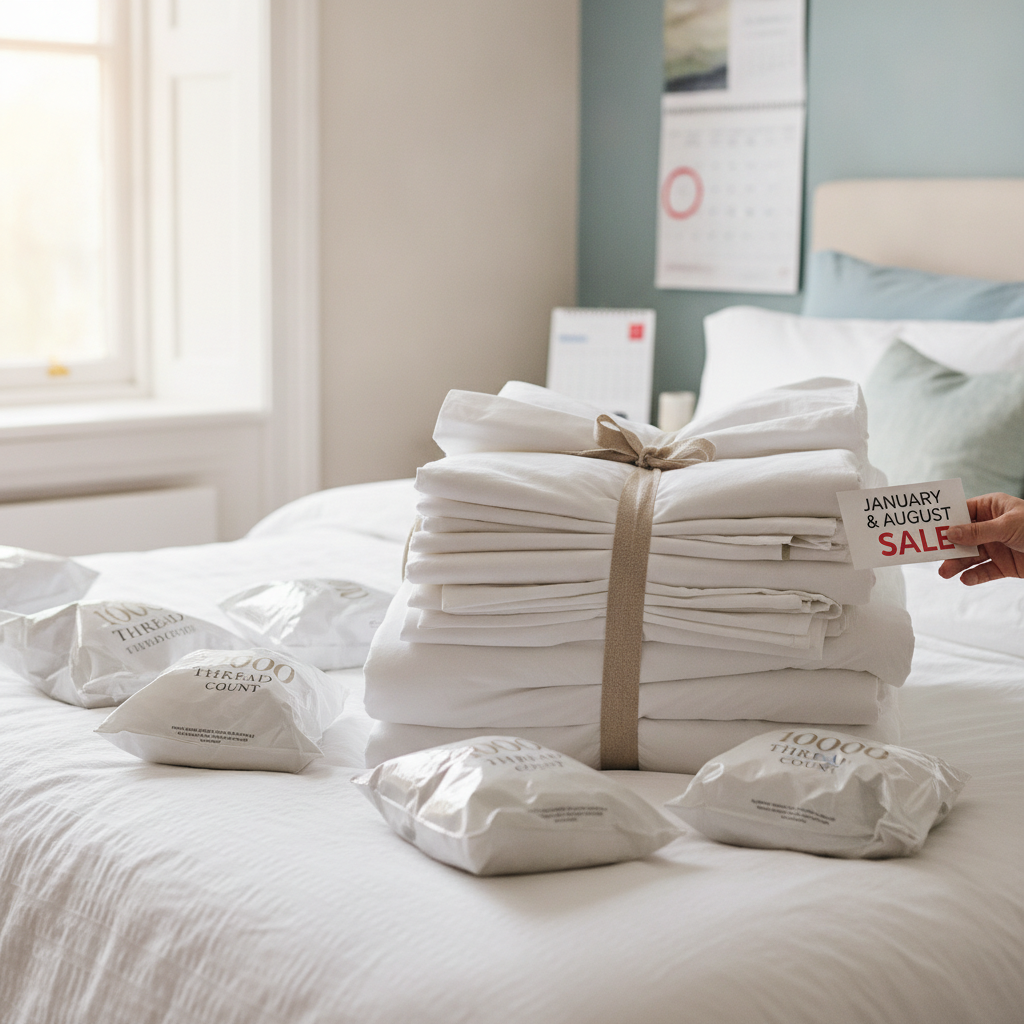
Bedding is one of the most heavily marketed categories in home goods retail, and it's also one of the most consistently discounted twice a year at predictable, well-established intervals. January and August white sales have anchored the retail calendar for over a century, and savvy shoppers who time their purchases around these windows routinely walk away with better-quality sheets, duvet covers, and pillowcases than they'd ever buy at full price — often from the same brands they'd already been eyeing.
The Long History Behind White Sales Worth Understanding
The term "white sale" dates to the late 1800s, when department stores used January's slow retail period to move excess inventory of white linen goods. The August version emerged later as a mid-year clearance event. Both windows stuck because they work for retailers and buyers alike — stores move overstock, and consumers gain access to genuine markdowns rather than manufactured sale events. Understanding this history helps you treat these windows as structural retail events, not just seasonal promotions.
Why Thread-Count Marketing Inflates Full-Price Expectations
Thread count became a popular shorthand for quality over the past few decades, and retailers leaned into it heavily because it gave them a simple number to justify higher price points. The reality is more nuanced. A 400-thread-count sheet made from long-staple cotton will often outperform a 1,000-thread-count sheet woven from shorter, coarser fibers. When you shop during white sales, the discount strips away some of the marketing pressure, and you're more likely to evaluate fabric type, weave style, and brand reputation instead of chasing a number. That shift in focus consistently leads to better purchases.
What to Look For Instead of Thread Count
Fabric type is a far more reliable quality indicator than any single number. Long-staple Egyptian cotton and Supima cotton produce sheets that soften with washing rather than pilling. Percale weave offers a crisp, cool feel, while sateen provides a smoother, slightly warmer drape — both are entirely valid choices depending on your sleep preferences and climate. During white sales, brands like Parachute, Brooklinen, and Boll & Branch typically offer their best annual discounts, which makes it the ideal time to try a higher-tier option without paying the full launch price you'd encounter in spring or pre-holiday months.
How to Prepare Before the Sale Windows Open
The shoppers who get the most from white sales are the ones who've already done their research before the discounts appear. Building a short wishlist in the weeks before January and August lets you compare discounted prices to baseline prices you've already tracked. Apps like Honey and Rakuten are genuinely useful here — Honey's price history feature shows you whether a retailer's "sale" price is actually a reduction or just a relabeled regular price, and Rakuten adds cashback on top of the discount at many participating bedding retailers. Combining both tools during a white sale amplifies your savings without requiring extra effort at checkout.
Timing Your Purchase Within the Sale Window
Not all days within a white sale window are equal. Inventory in popular sizes — queen sets in particular — tends to thin out quickly in the first few days. If you're targeting a specific color or style from a brand like Parachute or Brooklinen, acting in the first 48 to 72 hours of the event gives you the broadest selection. Toward the end of the window, deeper clearance discounts sometimes appear on remaining stock, but you risk losing your preferred option. For most shoppers, early action on a researched purchase beats waiting for a marginally better discount on a less desirable item.
Using Price-Tracking Tools to Validate the Discount
One of the most common frustrations with seasonal sales is discovering afterward that the price wasn't as good as it appeared. CamelCamelCamel is primarily known as an Amazon price tracker, but it's worth using alongside Honey to cross-reference prices on bedding sets available through multiple channels. When a retailer's direct site runs a white sale, checking whether the same product is available on Amazon — and what its price history looks like — gives you a fuller picture of whether the deal is genuinely competitive. This extra step takes only a few minutes and can prevent the quiet disappointment of realizing you paid more than necessary.
Building a Bedding Replacement Cycle Around Sale Windows
Quality bedding doesn't need to be replaced every year, but a planned replacement cycle makes sense for most households. Pillow inserts typically need refreshing every one to two years, duvet inserts every three to five, and sheet sets vary by usage and washing frequency. Mapping your household's actual needs against the January and August windows — and keeping a note in your calendar about what's due for replacement — turns white sales from a vague seasonal opportunity into a reliable, low-effort system for maintaining a well-equipped bedroom without overspending.
The consistent advantage of shopping white sales isn't simply that things cost less — it's that the discount environment encourages more deliberate choices. When the pressure of full-price marketing eases, you're more likely to evaluate fabric, weave, and brand reputation rather than chasing a thread-count number that tells only part of the story. January and August offer two reliable chances each year to stock your bedroom with genuinely better bedding at genuinely better prices, and a small amount of preparation before each window opens makes the difference between a good purchase and a great one.